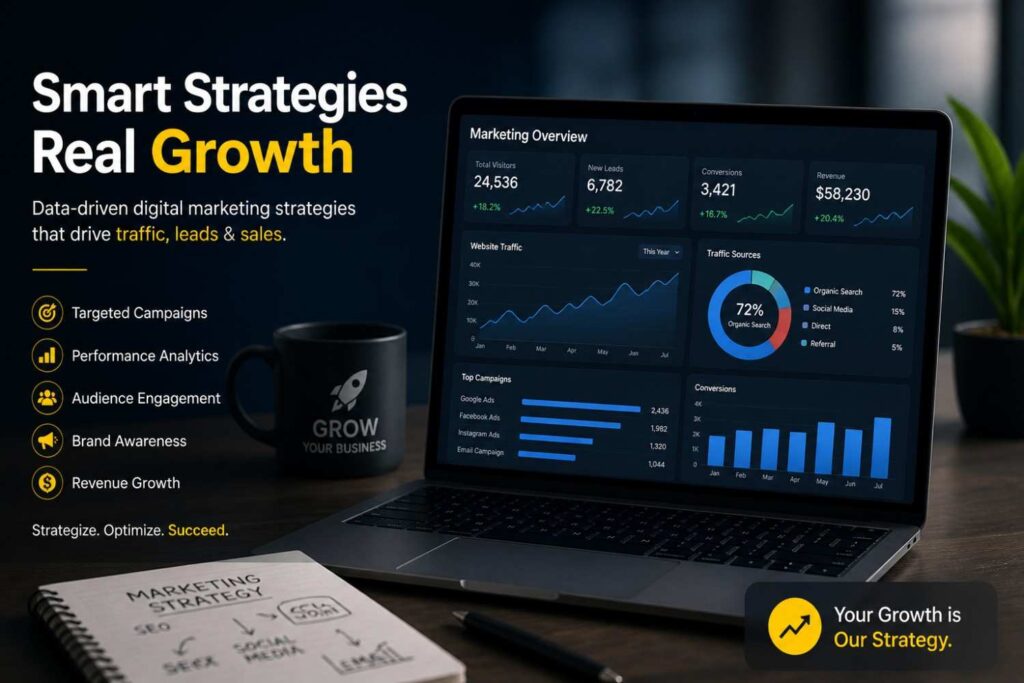
Why Small Business Marketing Needs a Clear Digital Strategy
Small businesses often struggle to grow online without a clear plan. However, a well-defined small business marketing strategy can completely transform how a business performs in the digital space. Moreover, digital platforms now provide powerful tools to connect with the right audience at the right time. As a result, businesses that follow a structured approach experience faster growth and better engagement.
Moreover, digital platforms have changed how businesses connect with customers. Today, people research online before making decisions. Whether they want to purchase a product, choose a service, or compare options, they depend on digital content. As a result, businesses that invest in small business marketing gain a strong competitive advantage over those that do not.
In addition, a clear strategy helps businesses focus on what actually works. Many small businesses waste resources on ineffective marketing activities. Consequently, they fail to achieve consistent growth. On the other hand, a structured approach ensures that every effort contributes to long-term success.
Furthermore, a digital strategy enables businesses to track their performance. Therefore, they can measure results, identify gaps, and improve continuously. This ability to adapt and optimize makes digital marketing far more powerful than traditional methods.
Why Small Business Marketing Requires a Digital Foundation
A strong digital presence is essential for success in today’s competitive market. Without visibility online, businesses struggle to attract new customers and build trust.
Moreover, customers expect businesses to be available online at all times. Whether they search on Google, browse social media, or read reviews, they want quick and reliable information. As a result, businesses that maintain an active online presence gain credibility and recognition.
In addition, digital platforms allow businesses to showcase their products and services effectively. Through images, videos, and informative content, companies can communicate their value clearly. Consequently, customers feel more confident when making purchasing decisions.
Furthermore, digital presence enables direct communication with customers. Businesses can respond to questions, collect feedback, and build relationships. Therefore, small business marketing becomes more interactive and customer-focused.
Another key advantage involves reach. Digital platforms remove geographical barriers. As a result, businesses can connect with customers from different locations without increasing costs significantly. This broader reach creates more opportunities for growth and expansion.
Building a Strong Foundation for Small Business Marketing
Every successful marketing strategy begins with a strong foundation. Therefore, small business marketing must start with clear planning and well-defined objectives.
Moreover, businesses should establish a strong brand identity. This includes defining their mission, vision, and values. As a result, they can communicate consistently across all platforms and create a recognizable brand.
In addition, identifying a unique selling proposition helps businesses stand out. Customers need to understand why they should choose one business over another. Consequently, a strong value proposition increases engagement and interest.
Furthermore, consistency plays a crucial role in building trust. When businesses maintain the same tone, visuals, and messaging, customers feel more confident. Therefore, a solid foundation supports long-term success.
Another important element involves understanding the market. Businesses should analyze competitors and identify trends. As a result, they can position themselves effectively and offer better value.
Step-by-Step Small Business Marketing Strategy
A structured approach helps businesses achieve better results. Therefore, following a step-by-step process makes small business marketing more effective and manageable.
Step 1 – Set Clear Goals for Small Business Marketing
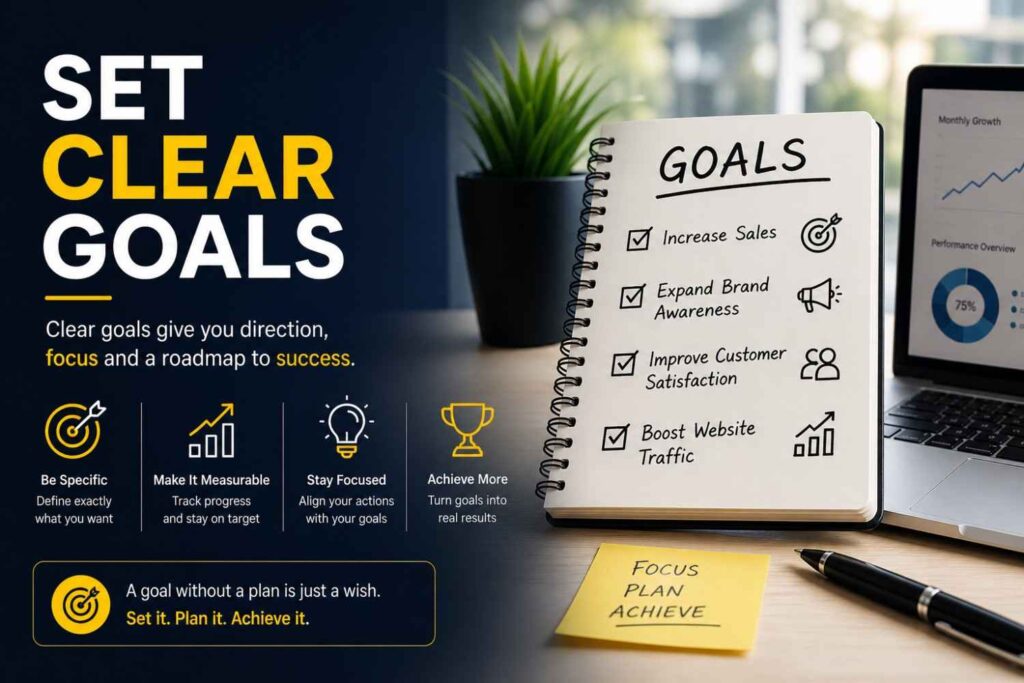
Setting clear goals is the first step toward success. Businesses should define what they want to achieve, such as increasing website traffic, generating leads, or boosting sales.
Moreover, clear goals provide direction. As a result, businesses can focus on actions that align with their objectives.
In addition, measurable goals help track progress. Consequently, businesses can evaluate their performance and make improvements.
Furthermore, realistic goals keep teams motivated. Therefore, businesses maintain consistency in their efforts.
Another important aspect involves setting timelines. Businesses should define deadlines for achieving goals. As a result, they can stay organized and accountable.
Step 2 – Identify Your Target Audience

Understanding your audience is essential for small business marketing success. Without proper targeting, even the best strategies may fail.
Moreover, businesses should analyze demographics such as age, location, and interests. As a result, they can create content that resonates with their audience.
In addition, studying customer behavior helps identify needs and preferences. Consequently, businesses can tailor their messaging effectively.
Furthermore, knowing your audience helps you choose the right platforms. Therefore, marketing efforts become more efficient.
Another important step involves creating buyer personas. These profiles represent ideal customers. As a result, businesses can design more focused campaigns.
Step 3 – Build a Strong Online Presence
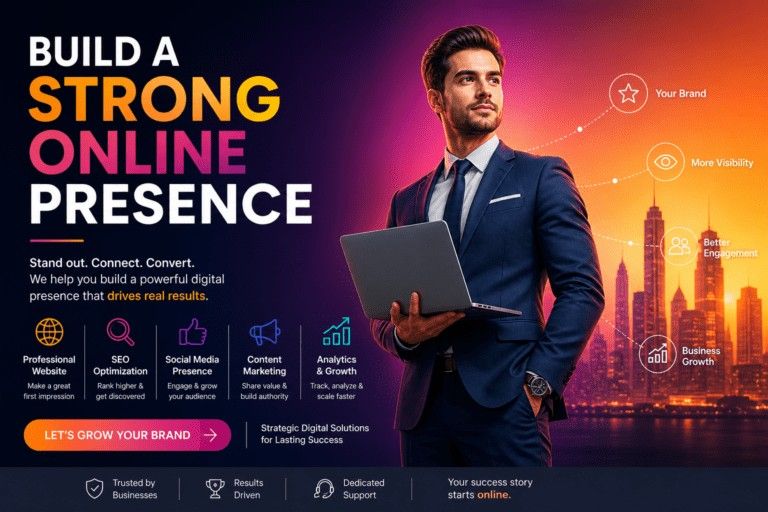
A strong online presence supports every small business marketing strategy.
First, businesses should create a professional website that reflects their brand identity. Moreover, the website should be mobile-friendly and easy to navigate. As a result, users enjoy a better experience.
In addition, businesses should maintain active social media profiles. Consequently, they can reach a wider audience and stay connected with customers.
Furthermore, consistent branding across platforms improves recognition. Therefore, businesses build trust over time.
Another important factor involves content consistency. Businesses should update their platforms regularly. As a result, they remain visible and relevant.
Step 4 – Use SEO to Boost Small Business Marketing

Search engine optimization plays a major role in small business marketing.
Moreover, using relevant keywords helps websites rank higher on search engines. As a result, businesses attract organic traffic.
In addition, creating valuable content improves credibility. Consequently, customers trust the brand more.
Furthermore, optimizing technical aspects such as page speed enhances performance. Therefore, SEO becomes a long-term growth strategy.
Another benefit involves cost-effectiveness. Unlike paid ads, SEO delivers long-term results without continuous spending. As a result, businesses can save resources.
Step 5 – Leverage Social Media Marketing
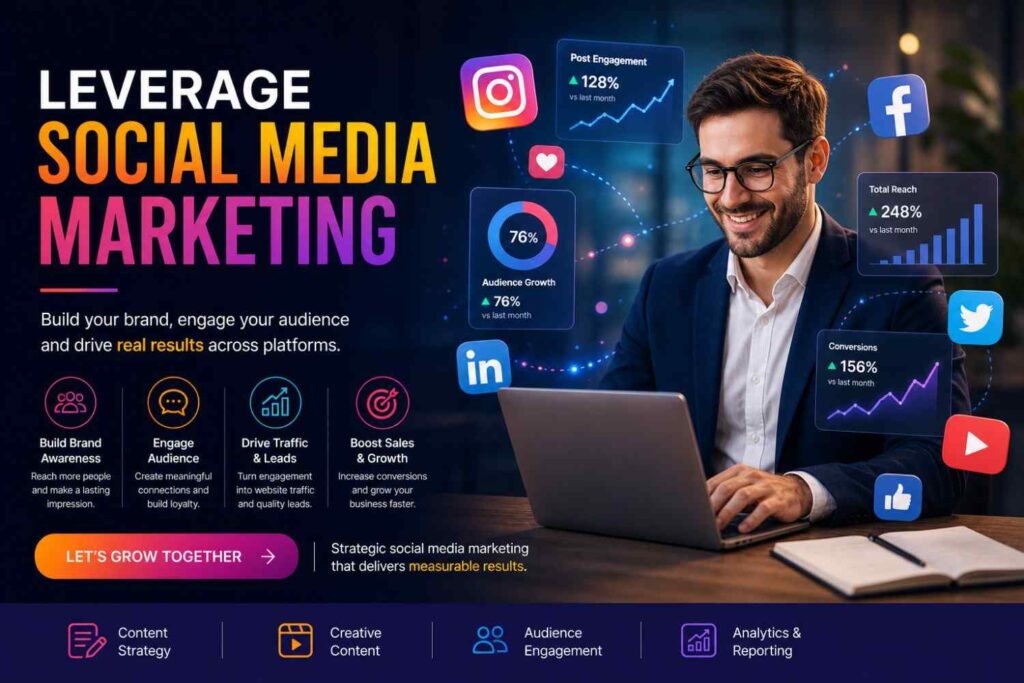
Social media platforms provide great opportunities for business growth.
Moreover, posting engaging content such as videos, reels, and tips attracts attention. As a result, businesses build a loyal audience.
In addition, interacting with followers strengthens relationships. Consequently, customer loyalty improves.
Furthermore, consistent posting keeps the brand visible. Therefore, businesses remain relevant in the market.
Another important aspect involves storytelling. Businesses should share their journey and values. As a result, customers connect emotionally with the brand.
Step 6 – Invest in Paid Advertising
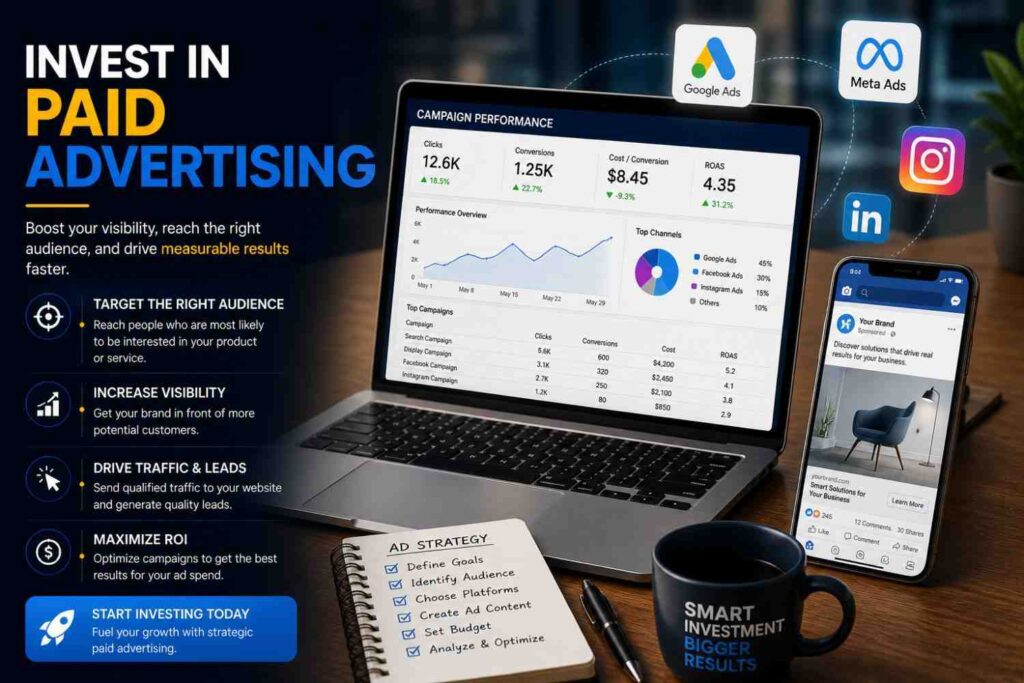
Paid advertising helps businesses reach their audience quickly.
For example, Google Ads target users who are actively searching for solutions. Moreover, social media ads help businesses reach specific audiences.
In addition, starting with a small budget allows businesses to test campaigns. Consequently, they can identify what works best.
Furthermore, scaling successful campaigns improves results. Therefore, paid advertising supports faster growth.
Another advantage involves precise targeting. Businesses can select audiences based on interests and behavior. As a result, campaigns become more effective.
Step 7 – Use Email Marketing Effectively
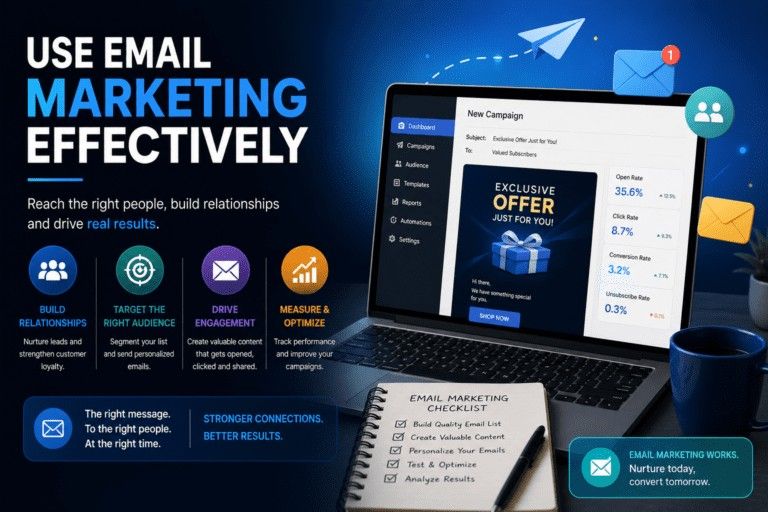
Email marketing remains one of the most powerful tools in small business marketing.
Moreover, personalized emails help build strong relationships with customers. As a result, customers feel valued.
In addition, regular communication keeps the audience engaged. Consequently, businesses maintain consistent interaction.
Furthermore, targeted campaigns improve conversion rates. Therefore, email marketing supports long-term success.
Another important element involves segmentation. Businesses should divide their audience into groups. As a result, they can send more relevant messages.
Step 8 – Track and Optimize Performance
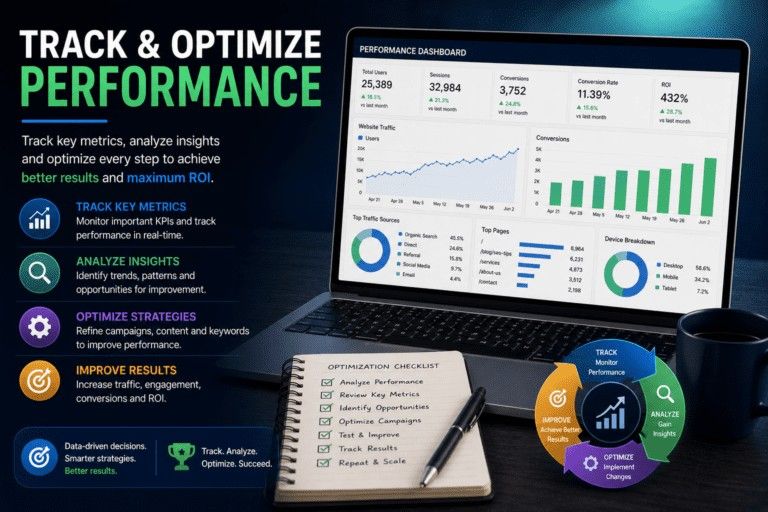
Tracking performance is essential for continuous improvement.
Moreover, analytics tools provide valuable insights into user behavior. As a result, businesses can refine their strategies.
In addition, data-driven decisions improve results. Consequently, businesses grow more efficiently.
Furthermore, continuous optimization ensures that strategies remain effective. Therefore, businesses stay competitive.
Another important practice involves testing different approaches. Businesses should experiment with content and ads. As a result, they can identify the best-performing strategies.
Advanced Strategies to Strengthen Small Business Marketing
Once businesses understand the basics, they can implement advanced strategies.
Moreover, content marketing helps build authority and trust. As a result, customers view the brand as reliable.
In addition, influencer collaborations expand reach. Consequently, businesses attract new audiences.
Furthermore, video marketing increases engagement significantly. Therefore, businesses should invest in visual content.
Additionally, automation tools improve efficiency. As a result, businesses save time and focus on growth.
Another advanced technique involves personalization. Businesses should customize content based on user behavior. As a result, engagement improves.
Common Mistakes in Small Business Marketing
Many businesses make avoidable mistakes. However, awareness helps prevent them.
For instance, unclear goals reduce effectiveness. Moreover, inconsistent posting weakens engagement.
In addition, ignoring SEO limits visibility. Consequently, businesses lose potential customers.
Furthermore, failing to track performance leads to poor decisions. Therefore, businesses must monitor results regularly.
Another mistake involves neglecting customer feedback. Businesses should listen to their audience. As a result, they can improve their offerings.
Benefits of a Strong Small Business Marketing Strategy
A well-planned strategy offers multiple benefits.
Moreover, it increases brand visibility. As a result, more people discover the business.
In addition, targeted campaigns improve conversions. Consequently, revenue grows steadily.
Furthermore, consistent efforts build trust and credibility. Therefore, customers remain loyal.
Additionally, data-driven decisions improve efficiency. As a result, businesses achieve long-term success.
Another benefit involves scalability. Businesses can expand their efforts as they grow. As a result, they can reach larger audiences.
Want to master small business marketing and build powerful strategies?
Join our Digital Marketing Course and learn practical skills to grow any business online.
Conclusion
Building a strong small business marketing strategy requires time, effort, and consistency. However, the results are worth it.
Moreover, focusing on the right strategies helps businesses achieve sustainable growth. As a result, they stay ahead of competitors.
In addition, continuous learning and improvement ensure long-term success. Consequently, businesses adapt to changing trends effectively.
Ultimately, a well-planned digital strategy will help your business attract customers, increase sales, and grow successfully.
FAQs:
A digital strategy is a structured plan that helps businesses use online platforms, digital marketing, and technology to increase visibility, attract customers, generate leads, and grow revenue.
A strong digital strategy helps businesses:
- improve online visibility
- reach target audiences
- increase brand awareness
- generate leads
- improve customer engagement
- stay competitive in the digital market
Important components include:
- SEO
- social media marketing
- content marketing
- paid advertising
- website optimization
- email marketing
- analytics and reporting
Social media marketing helps businesses:
- engage with customers
- build brand awareness
- increase website traffic
- promote products and services
- improve audience interaction