Introduction
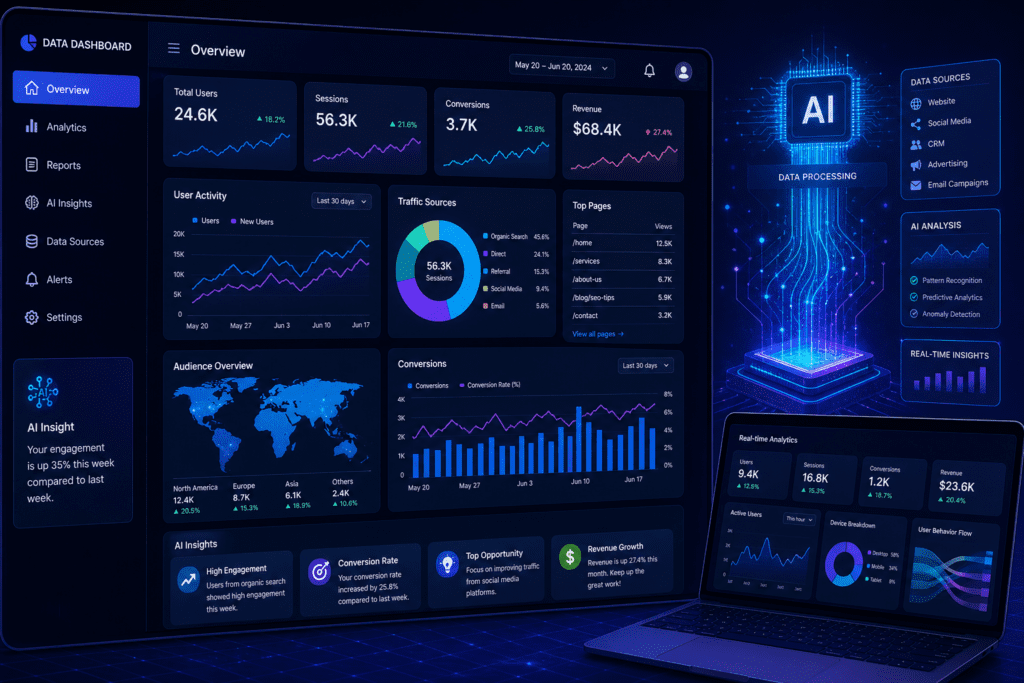
Data continues to shape business decisions across industries. Therefore, professionals must develop strong data analytics skills to remain competitive in 2026.
Moreover, companies rely heavily on data-driven insights to guide strategies. As a result, organizations actively seek individuals who can interpret and use data effectively.
In addition, industries such as healthcare, finance, and marketing depend on analytics for growth. Consequently, the demand for professionals with advanced data analytics skills continues to increase rapidly.
This guide explains the most important skills, tools, and career opportunities that employers expect in 2026.
Why Data Analytics Skills 2026 Are in High Demand
Businesses operate in a highly data-driven environment. Therefore, data analytics skills have become essential for success.
Moreover, organizations generate massive amounts of data daily. As a result, they need professionals who can transform this data into meaningful insights.
In addition, companies use analytics to understand customer behavior and improve performance. Consequently, decision-makers depend on accurate analysis.
Furthermore, rapid technological advancements continue to reshape industries. Therefore, professionals who develop strong data analytics skills gain a competitive advantage.
Step-by-Step Guide to Master Data Analytics Skills
Building strong analytics skills requires a structured approach. Therefore, following a step-by-step method helps learners achieve better results.
Step 1 – Learn the Fundamentals of Data
Start by understanding how data works. Moreover, focus on data collection, cleaning, and organization.
In addition, learn how to identify patterns and trends. As a result, you can extract valuable insights from raw data.
Furthermore, practicing with real datasets improves confidence. Consequently, your analytical thinking becomes stronger.
Step 2 – Learn Programming Languages
Programming knowledge strengthens data analytics skills significantly. Therefore, learning coding languages becomes essential.
For example, Python helps automate tasks and perform complex analysis. Moreover, R supports statistical computing effectively.
In addition, SQL allows you to manage and query databases. As a result, you can work with large datasets efficiently.
Step 3 – Develop Data Visualization Skills
Data visualization helps present insights clearly. Therefore, professionals must create charts and dashboards effectively.
Moreover, tools like Tableau and Power BI improve communication of data. As a result, stakeholders understand insights easily.
In addition, visual storytelling enhances decision-making. Consequently, businesses achieve better outcomes.
Step 4 – Understand Machine Learning Basics
Machine learning enhances this skill in modern industries. Therefore, professionals should understand predictive models.
Moreover, these models help forecast trends and behaviors. As a result, companies make smarter decisions.
In addition, automation reduces manual effort. Consequently, analysts focus more on strategy and innovation.
Step 5 – Build Critical Thinking and Problem-Solving Skills
Critical thinking plays a vital role in this skill. Therefore, professionals must evaluate data from multiple perspectives.
Moreover, problem-solving helps identify hidden insights. As a result, you can provide valuable recommendations.
In addition, logical reasoning improves accuracy. Consequently, your analysis becomes more effective.
Step 6 – Gain Practical Experience
Hands-on experience strengthens data analytics skills significantly. Therefore, working on real-world projects becomes essential.
Moreover, internships and freelance work provide exposure. As a result, you understand industry requirements better.
In addition, building a portfolio showcases your expertise. Consequently, employers recognize your capabilities quickly.
Key Data Analytics Skills 2026 Employers Look For
To succeed, professionals must focus on developing relevant skills. Therefore, understanding these core skills becomes crucial.
Data Analysis and Interpretation
Data professionals must analyze large datasets effectively. Moreover, they should extract meaningful insights from raw data.
As a result, businesses can make informed decisions quickly. Therefore, strong analytical thinking remains essential.
Knowledge of Programming Languages
Programming knowledge plays a vital role in data analytics.
For example, professionals often use Python, R, and SQL for data analysis. Moreover, these tools help automate processes and improve efficiency.
Data Visualization Skills
Data visualization helps communicate insights clearly. Therefore, professionals must create charts, dashboards, and reports.
In addition, tools like Power BI and Tableau enhance data presentation. As a result, stakeholders understand complex data easily.
Understanding of AI and Machine Learning
AI and machine learning continue to shape data analytics skills.
Moreover, professionals who understand predictive models gain a competitive edge. As a result, companies can forecast trends and improve strategies.
Critical Thinking and Problem-Solving
Analytical roles require strong problem-solving abilities. Therefore, professionals must evaluate data from multiple perspectives.
Furthermore, critical thinking helps identify patterns and trends. Consequently, businesses make smarter decisions.
Tools Required for Data Analytics
Professionals must use modern tools to improve data analytics skills. Therefore, learning the right tools becomes important.
Excel helps with basic data analysis. Moreover, Python and R handle complex tasks efficiently.
In addition, SQL manages large databases effectively. As a result, professionals can organize and retrieve data easily.
Furthermore, tools like Tableau and Power BI enhance data visualization. Consequently, businesses gain clear insights.
Cloud platforms such as AWS and Google Cloud also support analytics processes. Therefore, knowledge of these tools improves career opportunities.
Career Opportunities with Data Analytics Skills 2026
Data analytics offers diverse career paths. Therefore, professionals can choose roles based on their interests.
For example, data analysts interpret data for decision-making. Moreover, business analysts focus on improving business processes.
In addition, data scientists build predictive models and algorithms. As a result, organizations gain deeper insights.
Furthermore, companies across industries hire professionals with strong data analytics skills. Consequently, job opportunities continue to expand.
In addition, competitive salaries make this field attractive. Therefore, data analytics remains a promising career in 2026.
Common Mistakes to Avoid
Many learners make mistakes while developing data analytics skills. However, awareness helps avoid these issues.
For instance, focusing only on theory limits practical knowledge. Moreover, ignoring projects slows growth.
In addition, learning too many tools without mastery reduces efficiency. As a result, professionals struggle to apply their skills.
Furthermore, neglecting communication skills affects career growth. Therefore, professionals should develop both technical and soft skills.
Want to master data analytics skills 2026 and build a successful career?
Join our Data Analytics Course and gain practical, industry-ready skills today.
Conclusion
Data analytics continues to transform industries in 2026. Therefore, professionals must adapt to changing technologies.
Moreover, strong data analytics skills ensure long-term career growth. As a result, learners can stay competitive.
In addition, continuous learning and practice improve expertise. Consequently, professionals achieve better opportunities.
Ultimately, mastering data analytics helps build a future-ready career.
FAQs:
Employers commonly look for skills such as:
- data analysis
- Excel
- SQL
- data visualization
- problem-solving
- reporting
- communication
- critical thinking
Technical and analytical abilities are both important.
Businesses rely heavily on data to make decisions, improve customer experience, optimize operations, and increase profitability. Skilled data analysts are therefore in high demand across industries.
Popular data analytics tools include:
- Microsoft Excel
- SQL
- Power BI
- Tableau
- Python
- Google Analytics
These tools help professionals analyze and visualize data effectively.