Executive Summary
Nike is one of the world’s most recognized brands, but its digital success isn’t built on brand awareness alone. Behind every product launch, athlete campaign, and online sale is a carefully planned performance marketing strategy that helps the company reach customers at the right time and on the right platform.
Google and Meta play a major role in that strategy. Together, they help Nike connect with people throughout the buying journey—from someone searching for running shoes on Google to someone discovering a new product while scrolling Instagram.
Nike doesn’t rely on a single advertising channel. Instead, it combines search intent, video content, social media, first-party data, and direct-to-consumer experiences to create a connected digital ecosystem. This allows the company to increase visibility, drive online sales, and strengthen long-term customer relationships.
Nike has also invested heavily in its digital business over the past decade. Through initiatives such as Consumer Direct Offense and its consumer-led transformation, the company has focused on building stronger digital experiences while expanding its direct relationship with customers.
This case study explores how Nike uses performance marketing across Google and Meta, why these platforms are important to its digital strategy, and the lessons marketers can learn from one of the world’s largest sportswear companies.
About Nike

From a Running Shoe Company to a Global Brand
Nike began in 1964 as Blue Ribbon Sports before officially becoming Nike, Inc. in 1971. What started as a company focused on running shoes has grown into the world’s largest athletic footwear and apparel brand.
Today, Nike designs and sells footwear, apparel, equipment, accessories, and digital services in countries around the world. Its portfolio also includes Jordan Brand and Converse, allowing the company to serve different customer segments while maintaining a strong global presence.
Beyond physical products, Nike has expanded its digital ecosystem through Nike.com, the Nike App, SNKRS, Nike Training Club, and Nike Run Club. These platforms help the company build direct relationships with customers instead of relying only on retail partners.
According to Nike’s annual reports, its business now combines wholesale distribution with NIKE Direct, which includes both company-owned stores and digital platforms. This direct connection with consumers has become a major part of the company’s long-term strategy.
Nike's Digital Transformation
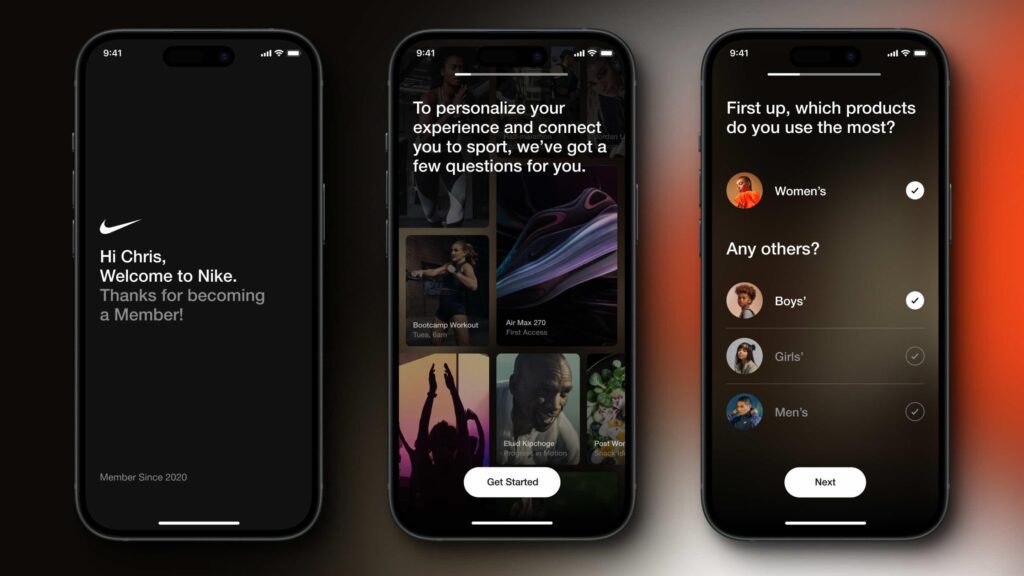
Over the last decade, Nike has shifted from being primarily a product company to becoming a digital-first brand.
Rather than viewing digital channels as another place to sell products, Nike has invested in creating connected experiences across its website, mobile apps, retail stores, and marketing campaigns.
One of the company’s biggest strategic moves was introducing its Consumer Direct Offense. The goal was to strengthen direct relationships with customers through faster innovation, better digital experiences, and stronger personalization. Later, Nike expanded this vision through its consumer-led transformation, placing digital experiences at the center of growth.
This shift also changed how Nike approaches marketing.
Instead of focusing only on large brand campaigns, the company now combines storytelling with measurable digital marketing activities that support customer acquisition, engagement, and sales.
Understanding Performance Marketing
What Is Performance Marketing?
Performance marketing is a digital marketing approach where campaigns are measured using specific business results rather than visibility alone.
Unlike traditional advertising, where success is often measured through reach or impressions, performance marketing focuses on actions such as website visits, app installs, product purchases, lead generation, or customer retention.
Platforms like Google Ads and Meta Ads allow marketers to monitor campaign performance in real time. They can measure clicks, conversions, return on ad spend (ROAS), cost per acquisition (CPA), and many other performance metrics.
This data helps businesses improve campaigns continuously instead of waiting until a campaign has finished.
For companies selling products online, performance marketing has become one of the most important tools for driving measurable growth.
Why Performance Marketing Matters
Consumer buying behavior has changed significantly.
People now research products on search engines, watch reviews on YouTube, discover brands on Instagram, compare prices online, and complete purchases across multiple devices.
This creates a complex customer journey.
Performance marketing helps companies stay visible during each stage of that journey. Someone searching for “best running shoes” may discover Nike through Google Search, watch a product video on YouTube, see a retargeting advertisement on Instagram, and finally purchase through the Nike website or app.
Instead of treating each interaction separately, performance marketing connects them into one measurable customer journey.
That ability to measure and optimize results makes it especially valuable for global brands operating across multiple digital platforms.
Why Performance Marketing Matters to Nike
Supporting a Direct-to-Consumer Business
Nike’s business has changed significantly over the past decade.
While wholesale partnerships remain important, the company has invested heavily in NIKE Direct, which includes its website, mobile apps, and company-owned stores. This gives Nike greater control over the customer experience while providing access to valuable first-party data.
Performance marketing plays an important role in supporting this strategy.
Instead of simply increasing brand awareness, digital campaigns encourage customers to visit Nike’s website, download its apps, explore new collections, and complete purchases directly through Nike’s own channels.
The stronger these direct relationships become, the more effectively Nike can personalize future marketing and product recommendations.
Measuring Marketing Performance
For a global company, marketing decisions involve significant investment.
Performance marketing allows Nike to evaluate how campaigns contribute to business goals using measurable indicators rather than assumptions.
Although Nike does not publicly disclose the detailed setup of its advertising campaigns, its digital-first strategy and continued investment in consumer-facing digital experiences show the importance of measurable marketing performance across its business.
By combining brand marketing with measurable digital campaigns, Nike can support both long-term brand building and short-term business objectives.
Why Google and Meta Matter for Performance Marketing
Google Captures Purchase Intent
Google plays an important role because it reaches customers when they are actively searching for products.
Someone looking for running shoes, football boots, or workout clothing often begins with a Google search.
This creates strong purchase intent.
For companies like Nike, search advertising helps place relevant products in front of customers during the decision-making process.
Google’s ecosystem also extends beyond Search. YouTube, Google Shopping, Display, Discover, and other advertising products allow brands to remain visible throughout different stages of the customer journey.
Nike continues to strengthen its relationship with Google. In 2026, the company announced an AI-powered shopping experience designed to help customers discover and purchase Nike products more quickly through Google’s conversational shopping features.
Meta Builds Discovery and Demand
If Google captures existing demand, Meta helps create it.
Platforms such as Facebook and Instagram allow brands to introduce products before customers begin actively searching.
Athlete stories, product launches, lifestyle imagery, short-form videos, and creator collaborations help Nike inspire audiences while encouraging engagement.
Meta also provides sophisticated audience targeting and retargeting capabilities that support different stages of the buying journey.
Rather than treating Google and Meta as competing platforms, Nike benefits from using them together.
Google captures intent.
Meta builds interest.
Together, they create a marketing ecosystem that supports awareness, consideration, and conversion across multiple customer touchpoints.
Nike's Customer Journey
A Connected Buying Experience
Buying a pair of Nike shoes isn’t always a one-step decision.
A customer might first notice a new running shoe on Instagram. Later, they search for reviews on Google, watch a YouTube video, compare different models, and finally purchase through Nike’s website or app.
Nike builds its performance marketing around this journey instead of treating every interaction as a separate campaign.
Each platform serves a different purpose. Social media creates interest, search captures buying intent, and retargeting encourages customers to return if they leave without making a purchase.
This connected approach allows Nike to stay visible from the first product discovery to the final checkout.
Marketing Across Every Stage
Nike’s customer journey generally follows four stages.
First comes awareness. Customers discover new products through social media, athlete partnerships, YouTube videos, and digital campaigns.
Next is consideration. They begin comparing products, reading reviews, and searching for more information.
Then comes conversion. Customers visit Nike.com, the Nike App, or a retail partner to complete their purchase.
Finally, Nike focuses on retention by encouraging repeat purchases through memberships, personalized recommendations, exclusive product launches, and its digital apps.
Performance marketing supports each stage with different campaign objectives rather than using the same message everywhere.
How Nike Uses Google for Performance Marketing
Capturing High-Intent Searches
Google is often where customers go when they’re ready to make a decision.
Someone searching for terms like “Nike running shoes,” “best basketball shoes,” or “Nike Air Max” is already showing purchase intent.
Search advertising allows brands to appear when customers actively look for products.
Nike benefits because its products already have strong brand recognition. Search campaigns help connect that demand with relevant landing pages, product collections, or new launches.
Unlike social media, where products interrupt entertainment, Google reaches users who are already looking for answers or products.
This makes search one of the strongest channels for performance marketing.
Google Shopping and Product Discovery
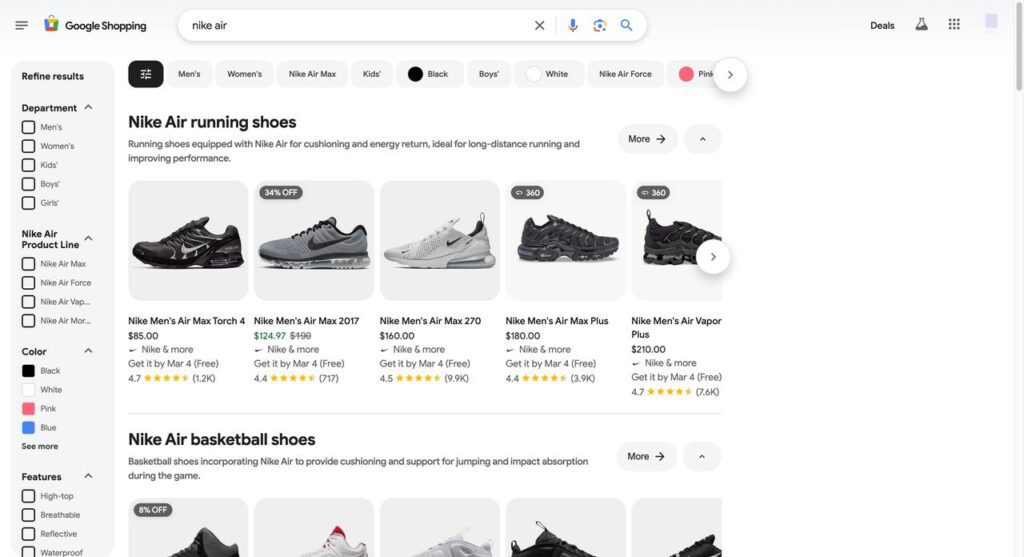
Google Shopping has changed how consumers compare products.
Instead of reading long lists of search results, shoppers can immediately see product images, prices, ratings, and retailers.
For brands like Nike, this visual experience helps customers evaluate products before visiting the website.
Shopping campaigns also support seasonal launches, limited editions, and popular product categories by placing relevant products directly within shopping results.
For many customers, Google Shopping becomes the bridge between product research and purchase.
YouTube as a Performance Channel
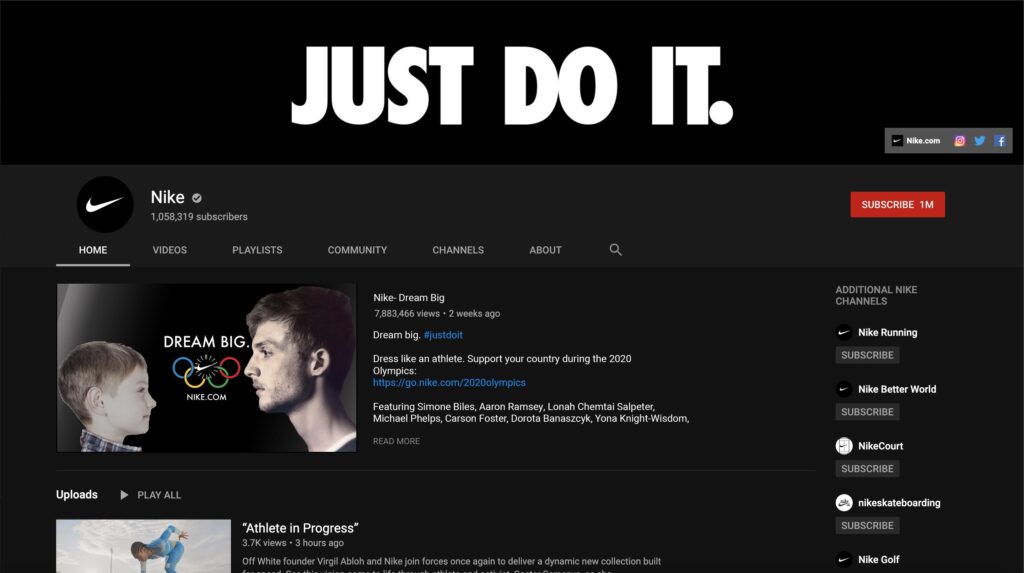
YouTube is more than a video platform.
It’s also one of Google’s largest advertising channels.
Nike regularly publishes athlete stories, product launches, campaign films, training content, and inspirational videos through YouTube.
These videos strengthen brand awareness while supporting product discovery.
Consumers often watch shoe reviews, workout demonstrations, or performance comparisons before making a purchase.
Video advertising helps Nike remain part of that decision-making process while directing interested viewers toward its website or mobile apps.
How Nike Uses Meta for Performance Marketing
Building Product Discovery
Meta platforms help people discover products before they begin searching for them.
Instagram, Facebook, and Reels allow Nike to introduce new collections through visual storytelling rather than direct selling.
Instead of focusing only on product specifications, Nike highlights athletes, training moments, fashion, and lifestyle content.
This creates emotional connections while naturally introducing products within engaging content.
The goal is not simply to generate immediate sales.
It is to keep Nike at the top of consumers’ minds.
Instagram as a Visual Storefront
Instagram has become one of Nike’s strongest brand-building platforms.
Product launches often appear alongside athlete collaborations, behind-the-scenes content, short-form videos, and community stories.
The platform allows Nike to combine storytelling with shopping.
Customers can discover products while browsing content instead of visiting an online store intentionally.
This creates a smoother path between inspiration and purchase.
Instagram also supports creator collaborations that expand Nike’s reach beyond its own audience.
Facebook's Role
Although Instagram receives much of the attention, Facebook continues to play an important role.
Its large global audience makes it valuable for reaching different customer segments across age groups and regions.
Facebook also supports product promotion through videos, collections, event campaigns, and community engagement.
Combined with Meta’s advertising tools, it helps brands reach users based on interests, behaviors, and previous interactions.
This flexibility makes Facebook useful for both awareness campaigns and conversion-focused marketing.
Audience Targeting in Performance Marketing
Reaching Different Customer Segments
Nike doesn’t speak to every customer in the same way.
A marathon runner, a football player, and someone buying sneakers for casual wear all have different interests.
Performance marketing makes it possible to deliver more relevant advertisements to different audiences.
Google captures users based on search behavior, while Meta provides detailed audience targeting based on interests, demographics, engagement, and online activity.
This allows campaigns to become more relevant instead of showing identical advertisements to everyone.
Personalization at Scale
Nike has invested heavily in building direct relationships with customers through its apps, memberships, and digital platforms.
These interactions create opportunities for more personalized experiences.
Someone interested in running products may receive different recommendations than someone who frequently shops for basketball footwear.
Although Nike does not publicly disclose the exact structure of its advertising audiences, its broader digital strategy emphasizes personalization and consumer-focused experiences across digital channels.
This helps improve customer satisfaction while increasing marketing efficiency.
Remarketing and Customer Retention in Performance Marketing
Staying Connected
Not every customer purchases on their first visit.
Many compare products, read reviews, and return later.
Performance marketing allows brands to reconnect with interested customers after they leave a website or app.
Remarketing helps remind shoppers about products they previously viewed or categories they explored.
This keeps the brand visible during longer buying decisions.
Beyond the First Purchase
Nike’s relationship with customers doesn’t end after checkout.
Membership programs, the Nike App, SNKRS, Nike Training Club, and Nike Run Club help maintain long-term engagement.
These platforms create regular opportunities to introduce new products, training content, challenges, and exclusive releases.
Performance marketing supports these experiences by encouraging users to return instead of focusing only on acquiring new customers.
Retention often costs less than acquiring entirely new audiences, making it an important part of Nike’s digital strategy.
First-Party Data
Why It Matters
Digital advertising has changed significantly as privacy expectations have increased.
Brands now place greater importance on first-party data—information customers choose to share directly through memberships, purchases, and digital interactions.
Nike’s membership ecosystem allows the company to better understand customer preferences while improving personalization across its digital experiences.
This creates stronger long-term relationships without relying entirely on third-party tracking.
Supporting Better Marketing
First-party data helps brands deliver more relevant experiences.
Instead of sending identical messages to every customer, campaigns can become more personalized based on previous interactions.
For example, a customer interested in running products may receive different recommendations than someone who primarily shops for lifestyle sneakers.
This improves relevance while making marketing more useful for consumers.
Nike’s continued investment in its digital ecosystem shows the importance of building direct customer relationships rather than depending solely on external advertising platforms.
Measuring Success
Beyond Clicks
Performance marketing isn’t measured only by clicks.
Brands also evaluate business outcomes such as online sales, return on advertising spend, customer acquisition, repeat purchases, app engagement, and lifetime customer value.
These measurements help marketers understand whether campaigns contribute to long-term business growth instead of temporary traffic increases.
Continuous Optimization
One of the biggest advantages of digital marketing is flexibility.
Campaigns can be adjusted while they’re running.
Creative assets, audiences, budgets, bidding strategies, and landing pages can all be improved based on performance data.
Although Nike doesn’t publicly share the details of its optimization process, continuous testing is a standard practice across modern performance marketing.
This allows campaigns to become more efficient over time while supporting changing business goals.
STP Analysis
Segmentation
Nike serves a wide range of customers across different age groups, lifestyles, and sports.
Its audience includes runners, football players, basketball fans, gym enthusiasts, outdoor athletes, and people who simply wear sneakers as part of everyday fashion. Instead of treating them as one large group, Nike creates products and campaigns for specific interests and needs.
This segmentation helps the company deliver more relevant messages across Google and Meta.
Targeting
Nike targets consumers based on their interests, shopping behavior, and stage in the buying journey.
Someone searching for “running shoes” on Google may see a different message than someone watching basketball content on Instagram or YouTube.
This allows Nike to deliver marketing that feels more relevant instead of showing the same advertisement to everyone.
Its membership programs and digital ecosystem further strengthen this personalized approach.
Positioning
Nike positions itself as a premium sports and lifestyle brand that inspires people to achieve their best.
Rather than competing mainly on price, Nike focuses on innovation, performance, quality, and emotional storytelling.
Its famous slogan, “Just Do It,” reinforces this positioning across digital campaigns, athlete partnerships, and social media.
Performance marketing supports this strategy by connecting inspiring brand stories with measurable business outcomes.
SWOT Analysis
Strengths
Nike’s performance marketing benefits from several major strengths.
- One of the world’s most recognized brands
- Strong direct-to-consumer ecosystem
- Large customer base
- High-quality products
- Powerful athlete partnerships
- Advanced digital platforms
- Strong first-party data through memberships and apps
These strengths help Nike generate both brand awareness and measurable sales.
Weaknesses
Despite its strong position, Nike also faces challenges.
As a premium brand, its products are often more expensive than competitors. This can limit purchases in price-sensitive markets.
Nike also depends heavily on digital platforms such as Google and Meta for customer acquisition. Changes in advertising costs, privacy regulations, or platform algorithms can affect campaign performance.
Maintaining personalization at a global scale also requires continuous investment in technology and data management.
Opportunities
Nike has several opportunities to strengthen its performance marketing.
These include:
- AI-powered advertising
- Better personalization
- Expansion into emerging markets
- Social commerce
- Connected shopping experiences
- Creator partnerships
- Interactive video advertising
As digital advertising continues to evolve, Nike is well positioned to adopt new technologies quickly.
Threats
Several external factors can influence Nike’s marketing performance.
These include:
- Growing competition from sportswear brands
- Rising digital advertising costs
- Changes in consumer behavior
- Privacy regulations
- Economic uncertainty
Remaining flexible and data-driven will continue to be important for maintaining growth.
Marketing Mix (4Ps)
Product
Nike offers footwear, apparel, accessories, equipment, and digital services for athletes and everyday consumers.
Its products are supported by innovation, athlete endorsements, and continuous product development.
Performance marketing helps showcase these products to customers at different stages of their buying journey.
Price
Nike follows a premium pricing strategy.
Instead of competing primarily on discounts, the company focuses on quality, innovation, and brand value.
Digital campaigns often emphasize exclusive launches, limited editions, and product benefits rather than price reductions.
Place
Nike reaches customers through multiple channels.
These include:
- Nike.com
- Nike App
- SNKRS
- Company-owned stores
- Retail partners
- Mobile shopping
Google and Meta help guide customers toward these purchase channels.
Promotion
Nike combines brand marketing with performance marketing.
Promotion includes:
- Google Ads
- Meta Ads
- YouTube campaigns
- Athlete partnerships
- Social media
- Email marketing
- Mobile apps
- Influencer collaborations
This combination helps Nike build long-term brand equity while driving measurable business results.
AARRR Growth Framework
Acquisition
Nike attracts customers through search engines, social media, YouTube, digital campaigns, influencer partnerships, and organic brand awareness.
Google captures users with purchase intent, while Meta introduces products to potential customers through engaging content.
Activation
After discovering Nike, customers can quickly explore products through the website or mobile apps.
The buying experience is designed to reduce friction through easy navigation, detailed product information, and personalized recommendations.
Retention
Nike invests heavily in customer retention.
Its membership program, Nike Run Club, Nike Training Club, and SNKRS encourage customers to stay connected long after their first purchase.
These platforms also provide valuable opportunities for personalized marketing.
Revenue
Nike generates revenue through:
- Direct online sales
- Retail stores
- Wholesale partners
- Mobile applications
- Membership-driven purchases
- Exclusive product launches
Performance marketing supports each of these revenue channels by driving qualified traffic.
Referral
Satisfied customers naturally recommend Nike products to friends, family, and online communities.
Athlete endorsements, social media conversations, and user-generated content further strengthen referral marketing.
This organic advocacy complements Nike’s paid advertising efforts.
Business Results through Performance Marketing
Strengthening Digital Growth
Nike’s continued investment in digital experiences has helped expand its direct relationship with customers.
According to the company’s annual reports, digital commerce remains a key part of its long-term growth strategy. Its investments in mobile apps, memberships, and direct-to-consumer channels support stronger customer engagement and more personalized experiences.
Performance marketing helps connect these digital experiences with measurable business outcomes.
Building Long-Term Customer Value
Nike’s goal extends beyond individual purchases.
By encouraging customers to join its membership ecosystem, download mobile apps, and interact with digital services, the company increases customer lifetime value.
This long-term approach allows Nike to maintain relationships beyond a single transaction while supporting repeat purchases and stronger brand loyalty.
Lessons for Marketers
Nike’s performance marketing strategy offers several valuable lessons.
Think Beyond Individual Campaigns
Successful performance marketing is built around the entire customer journey, not isolated advertisements.
Combine Brand and Performance Marketing
Strong branding increases the effectiveness of performance campaigns.
Nike shows that emotional storytelling and measurable marketing can work together.
Invest in First-Party Data through Performance Marketing
Building direct relationships with customers creates opportunities for better personalization and long-term growth.
Match the Platform to the Customer
Google and Meta serve different purposes.
Search captures existing demand.
Social media creates new demand.
Using both together creates stronger marketing results.
Keep Testing
Performance marketing isn’t a one-time activity.
Successful brands continuously improve campaigns based on data, customer behavior, and changing market conditions.
Key Takeaways of Nike's Performance Marketing
Nike’s success in performance marketing comes from combining strong branding with data-driven decision making.
Rather than relying on a single advertising platform, the company uses Google and Meta to support different stages of the customer journey.
Google helps capture customers who are actively searching for products.
Meta introduces products through visual storytelling and community engagement.
Together, these platforms support awareness, consideration, conversion, and long-term customer retention.
Nike also demonstrates that performance marketing works best when it supports a larger business strategy.
Its investments in memberships, mobile apps, digital commerce, and direct customer relationships make advertising more effective because they create a complete customer ecosystem.
For marketers, the lesson is clear.
Performance marketing is about more than generating clicks. It is about reaching the right audience, delivering relevant experiences, measuring meaningful business outcomes, and building lasting customer relationships.
Frequently Asked Questions
Nike combines Google and Meta advertising with its direct-to-consumer ecosystem to reach customers, drive online sales, and strengthen long-term customer relationships.
Google helps Nike reach customers who are actively searching for products, while Meta helps create demand through visual content, social media, and audience engagement.
No. Nike combines paid advertising with brand storytelling, athlete partnerships, social media, email marketing, memberships, and mobile apps to support its overall marketing strategy.
Marketers can learn the importance of combining brand building with measurable performance marketing, investing in first-party data, optimizing campaigns continuously, and creating a connected customer journey across multiple platforms.