Full Stack Development is one of the most demanding professions in the world.
Full stack developement should develop functional databases in order to provide support back-end and enhance the user experience by designing a visually appealing front end. They should take charge of end-to-end web architecture. They should also be able to maintain and upgrade the software as and when needed. They keep a check on the software projects from conception to the finished product. They are responsible for meeting both technical as well as consumer needs.
The world has become technology-driven, right from satellites in space to the mobile phones in our hands, it’s all technology. With the immense growth of social media platforms and digitally motivated business, the demand for full-stack developers will keep on rising in the coming years.
According to the 2021 Emerging Jobs Report (India) From LinkedIn, specialized engineering roles occupy the 5th position on their list. India’s status as a world leader in technology is well established with the second fastest digital adoption. The tech sector is expected to deliver up to 65 million jobs by 2025.
Full Stack developers are an important resource to any association that focuses on technology and its development. With the rapid increase in software products and the demand for fast growing technology, this profession is here to stay.
CAREER OPTIONS AFTER COMPLETING FULL STACK COURSE
1. Full-Stack Developer
Being a full-stack developer is something to be proud of because of the demand in the industry and the skills they possess.
A full-stack developer is supposed to look after both the client-side and server-side responsibilities. They are responsible for designing the websites and developing them as well. The front-end and back-end functioning and operability is the concern of a full-stack developer.
2. Back-End Developer
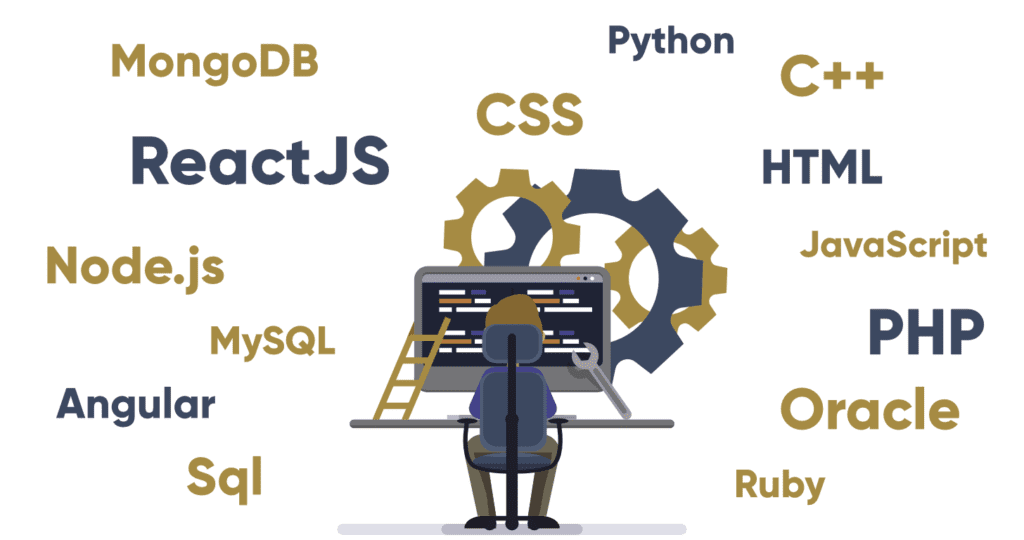
A back-end developer works on server-side technologies and system logic. Moreover, you can use languages like Python, Ruby, Java, and PHP for server-side scripting. As a result, you handle the core functionality of applications.
In addition, this role involves building and managing the “brain” behind digital systems. Therefore, companies rely on back-end developers for performance and security. Because of these responsibilities, back-end developers often earn higher salaries than full-stack developers.
3. Front-End Developer
Front-end developers focus on creating the user interface of websites. For example, you can use HTML, CSS, and JavaScript to design responsive layouts. Moreover, this role combines creativity with technical skills.
As a result, front-end developers build visually appealing and user-friendly experiences. In addition, they sometimes handle minor backend tasks. Therefore, this role connects design with functionality.
4. Web Developer
Web developers work on both front-end and back-end development. However, they often focus more on backend functionality than front-end developers. For instance, they use languages like Python and Ruby to build systems.
Moreover, they ensure that websites run smoothly and handle user requests efficiently. As a result, businesses depend on web developers for complete website functionality.
5. Web Designer
Web designers focus on the visual appearance and user experience of websites. Moreover, they work closely with front-end developers to create engaging designs.
In addition, they plan layouts, create designs, and develop website structures. As a result, they build websites that match business goals. Therefore, web designers must understand both user needs and brand identity.