Introduction: Freelance Video Editing Jobs
The demand for video content has never been higher, making freelance video editing jobs one of the fastest-growing opportunities in the digital economy. Today, brands, businesses, and content creators all rely on high-quality videos to succeed online. Furthermore, social media platforms such as Instagram, YouTube, and LinkedIn are prioritizing video content more than ever before. As a result, the demand for skilled professionals seeking freelance video editing jobs is growing at an incredible pace.
Fortunately, you do not need a film degree or expensive equipment to enter this field. Freelance video editing jobs are accessible to anyone willing to learn the craft, build a strong portfolio, and stay consistent. Meanwhile, India is experiencing a massive surge in content creation, with millions of new YouTube channels, Instagram pages, and digital marketing agencies launching every year. Consequently, the opportunities available through freelance video editing jobs are enormous and continue to grow rapidly.
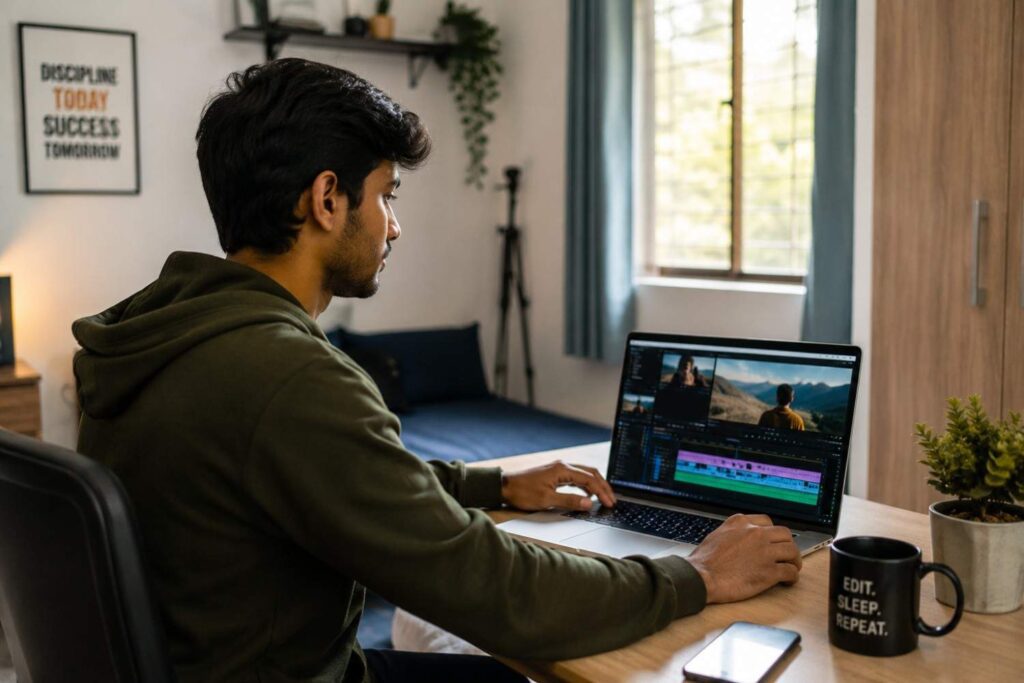
What makes 2026 especially exciting is that the barriers to entry have never been lower. For example, free professional-grade software like DaVinci Resolve allows beginners to start editing without investing in expensive tools. In addition, platforms such as Fiverr, Upwork, and Contra make it easier than ever to find international clients from anywhere in the world. As a result, a teenager in Pune or a fresh graduate in Chennai can earn in dollars while working remotely.
Meanwhile, India’s freelance economy continues to grow rapidly, and video editing remains one of its most in-demand skills. Therefore, if you have been waiting for the right time to start, now is the perfect opportunity. In this guide, you will learn the essential steps needed to secure your first freelance video editing job and build a successful career from there.
What Are Freelance Video Editing Jobs?
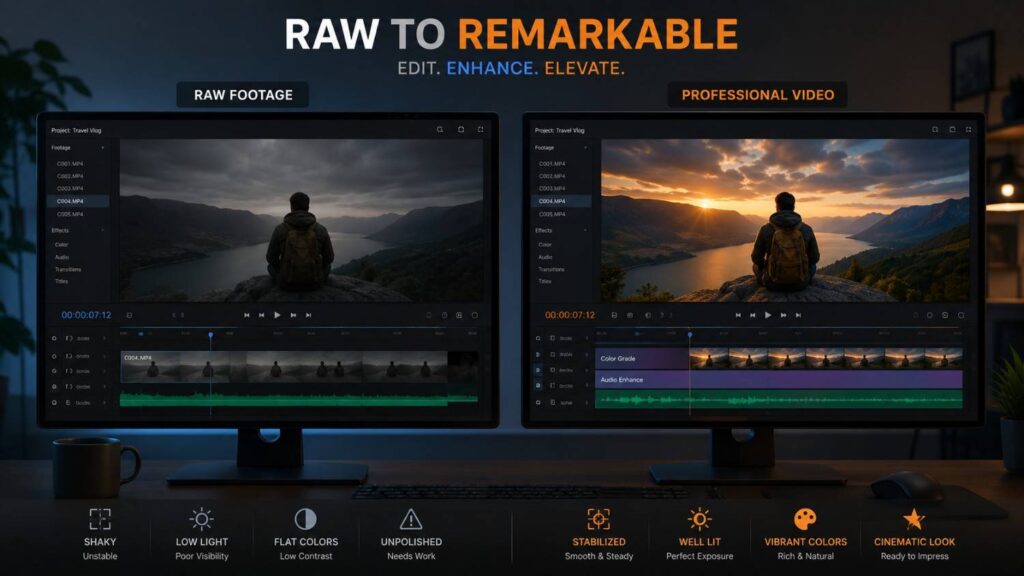
Freelance video editing involves transforming raw footage into polished, professional content for clients. Unlike traditional jobs, freelancers choose their own clients, set flexible schedules, and work entirely online. Typically, clients share files through platforms like Google Drive or Dropbox, while editors handle the editing process and deliver the final version remotely. As a result, location is no longer a limitation, and clients can come from anywhere in the world.
Additionally, freelance video editors can work with a wide range of clients, including YouTubers, e-commerce brands, coaches, real estate agents, wedding photographers, and digital marketing agencies. This variety allows editors to choose projects that match their interests and strengths. Common responsibilities include:
- Cutting and trimming raw footage
- Adding music, sound effects, and voiceovers
- Creating captions, subtitles, and text overlays
- Color grading for a professional appearance
- Adding transitions and motion graphics
- Exporting videos in the correct format for each platform
Freelance Video Editing Jobs After 12th: Is It Really Possible?
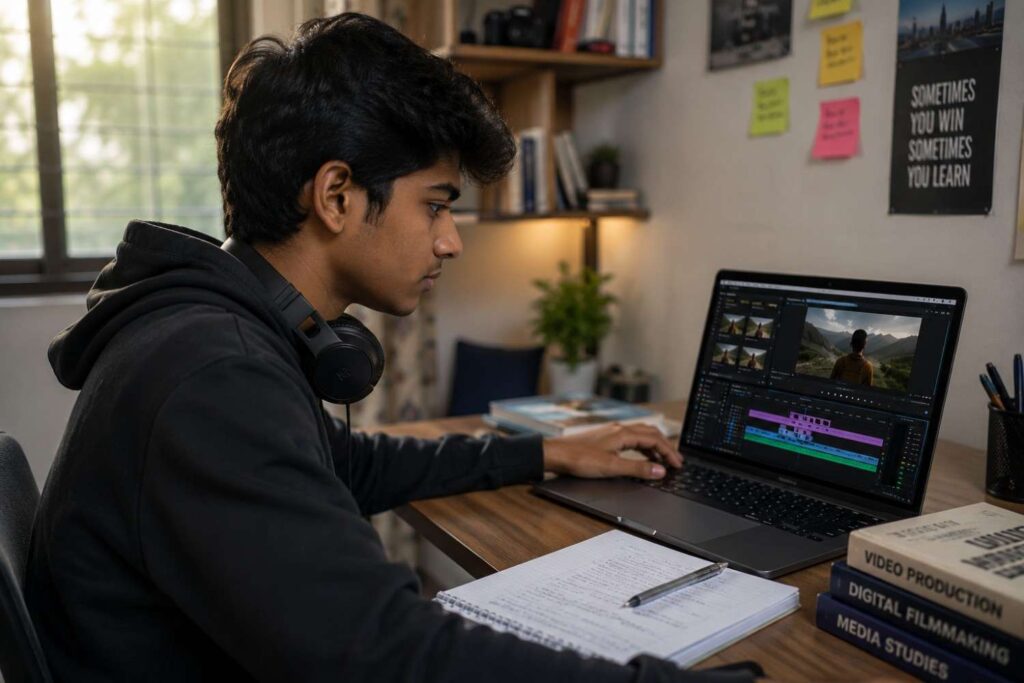
Absolutely! No client will ask to see your marksheet—they will ask to see your portfolio. This is one reason why freelance video editing jobs have become such an attractive career option for young Indians in 2026. In fact, many successful editors started learning during Class 11 or 12 and had already secured clients by the time they finished school. In this field, your skills and portfolio matter far more than your academic qualifications.
Moreover, the growing demand for video content continues to create new opportunities for skilled editors. While AI can handle basic edits, clients still value creativity, storytelling, and platform-specific expertise. Fortunately, these skills can be developed through consistent practice. To succeed in freelance video editing jobs, focus on learning:
- Video editing software such as DaVinci Resolve or CapCut
- Basic color correction techniques
- Audio syncing and cleanup
- Storytelling through pacing, cuts, and flow
- Export settings, codecs, and platform formats
- Basic motion graphics and simple animations
By mastering these skills, beginners can build a strong foundation and increase their chances of landing freelance video editing jobs successfully.
Freelance Video Editing Work From Home: How It Actually Works in 2026
Working from home as a video editor is completely normal in 2026. Clients simply share files through Google Drive, Dropbox, or WeTransfer, while communication takes place via WhatsApp, email, or Slack. As a result, freelancers can work from anywhere without commuting or office expenses. This flexibility becomes even more valuable when working with international clients who pay in USD or EUR.
Fortunately, you do not need an expensive setup to begin. Start with the equipment you already have and upgrade as your income grows. A basic home editing setup should include:
- RAM: Minimum 8GB; 16GB recommended for smoother editing
- Storage: At least 500GB SSD; 1TB or more for larger projects
- Display: A color-accurate IPS monitor for better visual quality
- GPU: A mid-range graphics card to speed up rendering
- Internet: Reliable broadband with good upload speeds
- Audio: Quality headphones for monitoring sound and audio mixes
With the right setup and skills, freelance video editing jobs can become a flexible and rewarding work-from-home career option.
Best Free Tools for Freelance Video Editing Work From Home
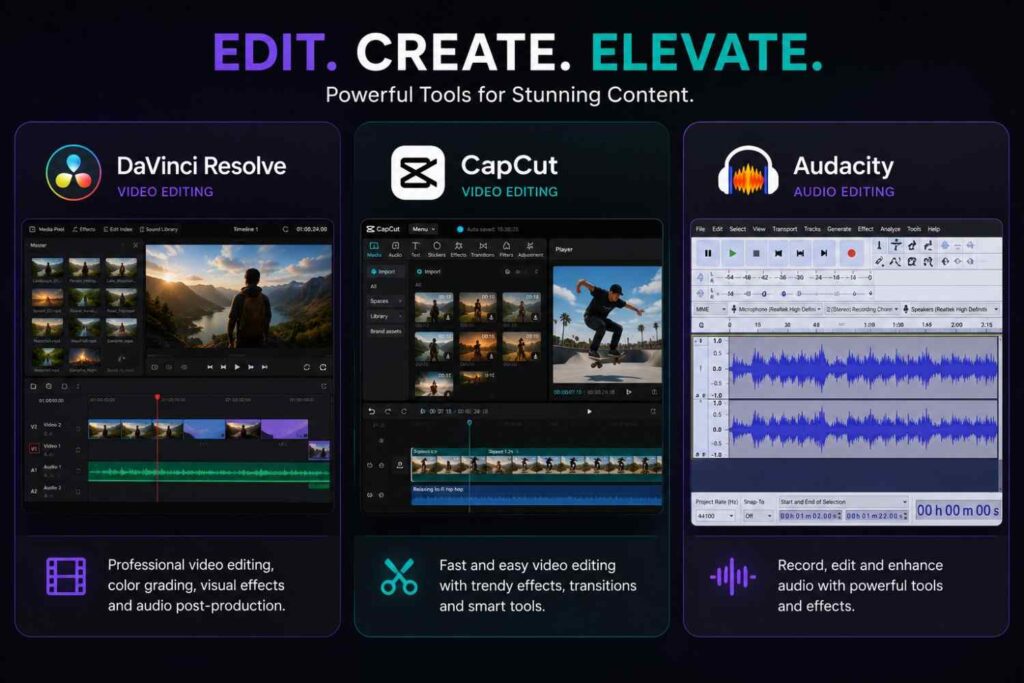
You don’t need to spend a rupee to get started. DaVinci Resolve is free, professional-grade, and used by Hollywood editors. CapCut is perfect for short-form content. Kdenlive handles timeline editing, and Audacity covers all your audio needs. Build your skills with these first — then reinvest earnings into paid tools like Adobe Premiere once clients are coming in.
Tool | Best For | Cost |
DaVinci Resolve | Professional editing & colour grading | Free |
CapCut | Reels, Shorts, TikTok content | Free |
Kdenlive | Open-source timeline editing | Free |
Canva Video | Simple social media content | Free (basic) |
Audacity | Audio cleanup and editing | Free |
Video Editing for YouTube: The Biggest Freelance Video Editing Jobs Opportunity in 2026
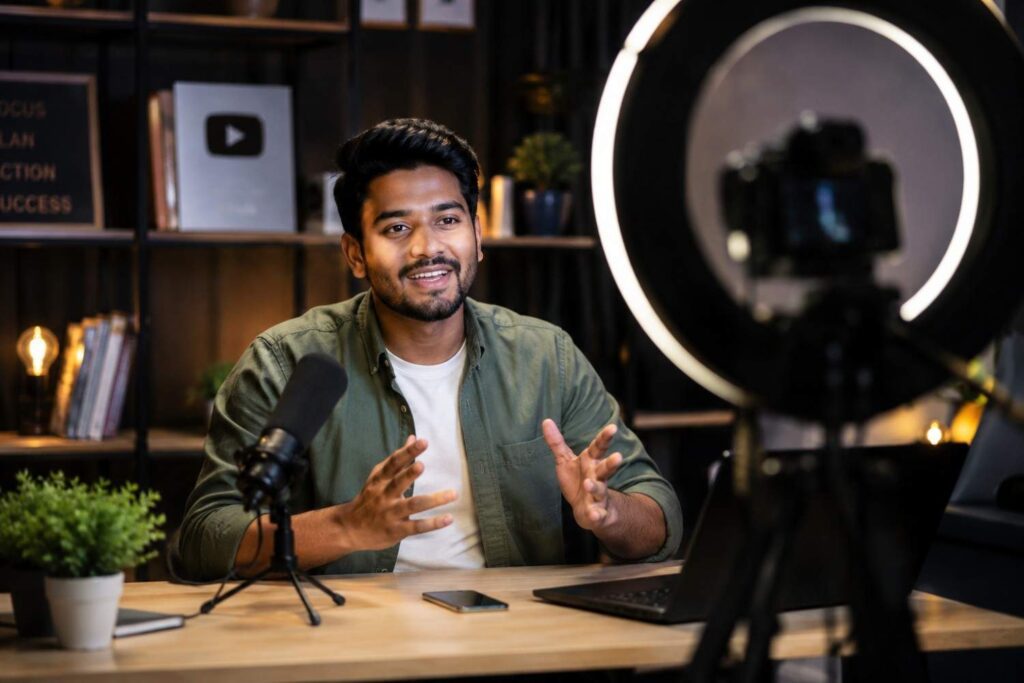
YouTube remains one of the biggest sources of freelance video editing jobs because thousands of new creators launch channels every day. As a result, the demand for skilled editors continues to grow. Even better, YouTube clients often become long-term partners, providing a stable monthly income as their channels expand.
However, YouTube editing involves much more than simply cutting clips together. Successful editors understand audience retention and know how to keep viewers engaged throughout the video. Skills such as jump cuts, B-roll integration, captions, and thumbnail optimization can give freelancers a significant advantage when pitching to creators. Clients commonly look for:
- Intro and outro animations for branding
- Custom thumbnail designs to improve click-through rates
- B-roll integration to maintain viewer engagement
- Jump-cut editing for a fast-paced viewing experience
- Chapter markers and timestamps for better navigation
- Captions and subtitles for accessibility and reach
- Color grading for a consistent visual style
By mastering these skills, freelancers can position themselves for higher-paying and long-term freelance video editing jobs in the YouTube ecosystem.
How to Find Your First YouTube Editing Client
One of the best ways to find freelance video editing jobs is through proactive outreach. Instead of waiting for clients, search for YouTube channels in niches you enjoy, such as finance, fitness, cooking, or technology. Creators with 1,000 to 50,000 subscribers are often ideal because they are growing quickly and may need editing support without having a full-time editor. Before reaching out, take time to review their recent content so your message feels personalized and relevant.
Additionally, creating a short sample edit from one of their videos can significantly improve your chances of getting noticed. This demonstrates your skills and initiative far better than simply saying you are available for work. You can also offer a trial project at a discounted rate to reduce the creator’s risk. If you do not receive a response, send one polite follow-up message after 5–7 days to increase your chances of securing freelance video editing jobs.
Top Platforms to Find Freelance Video Editing Jobs in India
Choosing the right platform can significantly impact your success in freelance video editing jobs, especially during the early stages of your career. For many beginners in India, Fiverr is a popular starting point because it allows freelancers to create service listings and attract clients directly. However, as your experience grows, it is beneficial to expand your presence across multiple platforms to increase opportunities and income sources.
At the same time, freelance platforms are not the only way to find clients. Direct outreach, social media networking, and client referrals can be equally effective for securing freelance video editing jobs. Therefore, combining multiple client acquisition methods often leads to faster growth and more consistent work opportunities.
1. Fiverr — Best for Complete Beginners
Fiverr is one of the most beginner-friendly platforms for finding freelance video editing jobs because its gig-based model allows clients to discover your services directly. Instead of spending time pitching, you can focus on creating an attractive gig with a clear title, well-structured packages, and strong sample videos that showcase your skills.
Additionally, Fiverr’s algorithm tends to reward sellers who receive positive reviews and complete orders successfully. Therefore, it can be beneficial to start with competitive pricing to build momentum and gain credibility. Most importantly, treat every early project as an opportunity to strengthen your reputation, earn reviews, and attract more freelance video editing jobs in the future.
2. Upwork — Best for Higher-Paying Long-Term Clients
Upwork is another popular platform for finding freelance video editing jobs, but unlike Fiverr, it requires freelancers to actively apply for projects. The advantage is that many clients on Upwork have larger budgets and often look for long-term editors on weekly or monthly retainers.
For beginners, it is usually best to start with smaller and less competitive projects to build a strong review history and client trust. During the first few months, focus on gaining positive feedback and completed projects rather than charging premium rates. As your profile grows stronger, securing higher-paying freelance video editing jobs becomes much easier.
3. Contra — Best for Keeping 100% of Your Earnings
Contra is becoming a popular platform for freelance video editing jobs because it charges zero commission, allowing freelancers to keep more of their earnings. Unlike Fiverr and Upwork, which deduct a percentage from each project, Contra offers a portfolio-first approach where your work takes center stage. This makes it especially useful for video editors who can showcase their skills through strong visual portfolios.
Although Contra has a smaller client base compared to larger freelance platforms, it works best when used alongside Fiverr or Upwork. Additionally, driving traffic to your Contra profile through social media can help attract more opportunities. Many freelancers also use Contra to secure long-term clients and retainer-based freelance video editing jobs.
4. LinkedIn — Best for Corporate and Professional Clients
LinkedIn is one of the most underrated platforms for finding freelance video editing jobs. Many Indian businesses, edtech companies, startups, and marketing agencies regularly post opportunities for video editors. Therefore, optimizing your profile with keywords such as “freelance video editor” can improve your visibility in search results and attract potential clients.
Additionally, posting content consistently helps build credibility and reach. Sharing project highlights, behind-the-scenes editing workflows, or quick editing tips two to three times per week can showcase your expertise. Over time, this consistent activity increases visibility, strengthens your personal brand, and generates inbound inquiries for freelance video editing jobs.
When starting out, not having clients is completely normal. For freelance video editing jobs, your portfolio does not need paid projects—it simply needs to demonstrate your skills. A great approach is to choose two or three niches you enjoy and create sample videos using free stock footage from sources like Pexels or Pixabay. For example, you can create a tutorial video, travel vlog, or product review to showcase your editing abilities.
Moreover, quality is far more important than quantity. Study successful creators in your chosen niche and apply similar techniques related to pacing, music selection, color grading, and caption styles. Once your samples are ready, upload them to YouTube as unlisted videos and organize them on a simple portfolio website using platforms like Canva Websites, Notion, or Wix. This gives potential clients a professional place to view your work and increases your chances of securing freelance video editing jobs.
Step 1: Create Self-Initiated Sample Projects
To build a strong portfolio for freelance video editing jobs, choose two or three niches with high demand, such as YouTube tutorials, travel vlogs, real estate walkthroughs, or fitness content. Then, use free stock footage from platforms like Pexels or Pixabay to create polished sample projects that showcase your editing skills.
Additionally, use royalty-free music from the YouTube Audio Library and focus on adding professional elements such as captions, color grading, smooth transitions, and engaging pacing. Aim to create a 2–3 minute video for each niche and export it in the highest quality possible. Most importantly, treat every sample project as if it were a real client assignment, because these portfolio pieces will play a crucial role in helping you secure your first freelance video editing jobs.
Step 2: Offer Discounted Work to Build Real Client Experience
Once your portfolio samples are ready, the next step is gaining real-world experience. A practical way to start is by offering discounted or free video edits to your first few clients. Reach out to local businesses, restaurants, gyms, content creators, or friends who have YouTube channels and offer to edit a video for them.
In return, request a written testimonial and permission to showcase the project in your portfolio. These real client reviews help build credibility and trust far more effectively than self-promotion alone. Additionally, satisfied clients often recommend your services to others, helping you secure more freelance video editing jobs through referrals.
Freelance Video Editing Jobs Rate in India: What to Charge in 2026
Pricing is one of the biggest challenges when starting freelance video editing jobs. Charge too little, and you may struggle to sustain your workload. Charge too much without experience or reviews, and potential clients may hesitate to hire you. Therefore, it is usually best to start with competitive rates and gradually increase your pricing as you gain experience, positive reviews, and a stronger portfolio. Additionally, international clients on platforms like Fiverr and Upwork often have larger budgets and are willing to pay more for quality work.
However, avoid staying at beginner rates for too long. As your skills and reputation grow, increasing your prices becomes necessary to reflect the value you provide. Another effective strategy is to offer service packages that combine video editing, thumbnail design, and captions. These bundled services make your offerings easier to understand and can help you earn more from each freelance video editing project.
Experience Level | Per Minute of Finished Video | Per Hour |
Beginner | ₹800 – ₹1,500 | ₹500 – ₹1,200 |
Intermediate | ₹1,500 – ₹4,000 | ₹1,200 – ₹3,000 |
Advanced | ₹4,000 – ₹12,000+ | ₹3,000 – ₹8,000+ |
Common Mistakes Beginners Make and How to Avoid Them
Many beginners make the mistake of trying to serve every type of client and edit every type of video. As a result, their portfolio becomes scattered and fails to demonstrate clear expertise. Therefore, it is important to choose a niche early and build your portfolio around it. While you can still accept different projects for income, maintaining a focused portfolio makes it easier to attract the right freelance video editing jobs.
Another common mistake is working without a contract. Relying only on WhatsApp conversations can lead to misunderstandings, unlimited revision requests, and even payment issues. Instead, use a simple written agreement that outlines the project scope, deadline, revision limits, payment amount, and payment terms. Not only does this protect both parties, but it also makes you appear more professional and trustworthy to clients.
Mistake 1: Taking Every Project Without a Niche Focus
Accepting every project may seem like a good idea in the beginning, but it often results in an unfocused portfolio. Clients usually prefer specialists who are known for a specific type of content. Therefore, choosing a niche such as YouTube educational videos, travel vlogs, or Instagram Reels for fitness brands can help you stand out in the competitive freelance video editing jobs market.
Additionally, niche expertise creates long-term advantages. As you continue editing similar types of content, your skills, efficiency, and industry knowledge improve significantly. Consequently, you can deliver better results, attract more referrals, and justify charging higher rates for your freelance video editing jobs over time.
Mistake 2: Skipping Client Communication and Contracts
Before starting any freelance video editing project, take time to gather detailed requirements from the client. Ask questions about the target audience, preferred tone, music style, pacing, and delivery format. The clearer the project brief, the fewer revisions and misunderstandings you will face later.
Additionally, using a simple written agreement helps protect both parties and sets clear expectations. A one-page email agreement outlining the project scope, timeline, revisions, and payment terms is often sufficient. Most importantly, request at least 50% payment upfront from new clients. Professional clients generally have no issue with reasonable payment terms, while resistance to basic agreements or deposits can sometimes indicate potential problems.
In-Demand Video Editing Skills That Pay the Most in 2026
AI tools such as Adobe Firefly, Runway ML, and CapCut AI are transforming freelance video editing jobs by automating tasks like background removal, rough cuts, and video enhancement. However, these tools are not replacing editors. Instead, they help editors work faster and more efficiently while allowing them to focus on creativity, storytelling, and audience engagement. Therefore, learning AI-powered editing tools can give freelancers a significant competitive advantage.
At the same time, short-form content continues to create massive opportunities. Platforms like Instagram Reels, YouTube Shorts, and TikTok require editors who understand fast-paced editing, strong opening hooks, and attention-grabbing captions. Additionally, podcast video editing is becoming increasingly popular as creators repurpose audio content into videos. To stand out in freelance video editing jobs, consider developing these high-demand skills:
- AI-assisted editing with Runway ML, Firefly, and CapCut AI
- Short-form content editing for Reels, Shorts, and TikTok
- Podcast video editing and content repurposing
- Motion graphics using Adobe After Effects
- Color grading with DaVinci Resolve
- Caption and subtitle creation using tools like Descript
Mastering these skills can help you attract higher-paying freelance video editing jobs and stay ahead of industry trends.
How Much Can You Realistically Earn From Freelance Video Editing Jobs in India?
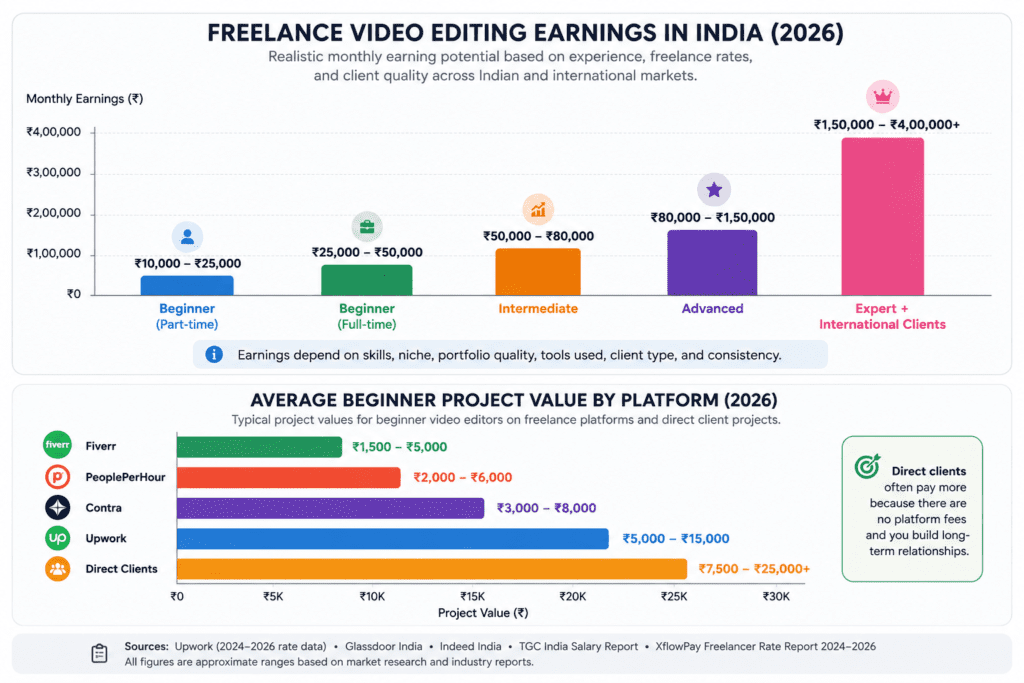
Earnings from freelance video editing jobs depend on your skills, niche, experience, and client acquisition efforts. In the beginning, even part-time editors can build a steady income by working with local businesses, content creators, or small brands. For those who consistently improve their skills and actively market their services, income can grow surprisingly fast within the first few months.
Moreover, experienced editors who work with international clients often earn significantly more because of higher project budgets and favorable currency conversion rates. Long-term retainer agreements can provide the most stable and predictable income. A realistic earning breakdown for freelance video editing jobs is:
- Part-time beginner (10–15 hours/week): ₹15,000 – ₹40,000 per month
- Full-time beginner: ₹30,000 – ₹70,000 per month
- Experienced full-time editor: ₹80,000 – ₹2,00,000+ per month
- Expert with international retainer clients: ₹2,50,000 – ₹5,00,000+ per month
While results vary, freelancers who specialize in a niche, build strong portfolios, and consistently attract clients generally see faster income growth over time.
Your 30-Day Action Plan to Land Your First Freelance Video Editing Job
One of the biggest mistakes beginners make is spending weeks watching tutorials without taking action. Although learning is important, freelance video editing jobs are secured through practice, portfolio building, and client outreach. Therefore, instead of waiting until you feel completely ready, focus on gaining real experience and showcasing your skills to potential clients. After all, taking action is what creates opportunities.
To help with that, this 30-day plan is designed to get you moving quickly. By the end of the month, you may not be an expert editor; however, you can have a professional portfolio, optimized freelance profiles, and active client pitches in progress. Most importantly, success comes from consistent effort rather than occasional bursts of motivation. In fact, small actions taken every day for 30 days will produce far better results than a few days of intense work followed by inactivity.
Week 1 — Learn, Install, and Set Up
- Install DaVinci Resolve and complete two beginner tutorials daily
- Set up your Fiverr profile with a strong title, description, and pricing
- Create your Upwork profile and complete all relevant skill assessments
- Watch at least five videos from top YouTube channels on freelance editing
Week 2 — Build Your Portfolio Samples
- Create your first self-initiated sample using free stock footage in your chosen niche
- Create two more samples in complementary niches
- Build a simple portfolio page on Canva Websites or Notion
- Reach out to three friends, family, or local businesses and offer a free edit
Week 3 — Start Pitching Actively Every Day
- Send 5–10 personalised pitches daily to YouTube creators and small businesses
- Post your sample work on Instagram Reels, LinkedIn, and YouTube Shorts
- Join Facebook groups and Discord servers for creators — offer genuine help
- Create a sample edit of a small creator’s video and send it as a pitch
Week 4 — Deliver, Collect Reviews, and Reinvest
- Deliver your first project with exceptional quality — at least a day before the deadline
- Follow up on every unanswered pitch from Week 3
- Request a written testimonial from every client you’ve worked with
- Reinvest first earnings into one upgrade — a course, plugin, or software trial
Final Thoughts: Your Freelance Video Editing Jobs Career Starts Today
Freelance video editing jobs are among the most accessible and scalable career opportunities available in 2026. In fact, the tools are affordable or free, learning resources are widely available, and clients can be found across industries worldwide. Most importantly, the biggest step is simply getting started. Therefore, installing editing software, creating your first portfolio sample, and sending your first client pitch can set your freelancing journey in motion.
Whether you are exploring video editing jobs after 12th, looking for work-from-home opportunities, or planning to specialize in YouTube content, the path to success is clear. To begin with, start with small projects, remain consistent, and focus on building strong relationships with every client. Moreover, by following a structured action plan, continuously improving your skills, and actively seeking freelance video editing jobs, you can create a steady income stream and build a rewarding long-term career.
FAQs:
Yes. Beginners can start by editing YouTube videos, Instagram Reels, podcasts, advertisements, and short-form content. A strong portfolio and practical skills are often more important than prior work experience.
Freelance video editors should understand video cutting, transitions, color correction, audio editing, motion graphics, storytelling, and software such as Adobe Premiere Pro, After Effects, and DaVinci Resolve.
The best video editing course combines practical training, live projects, portfolio development, and placement assistance. GICT's Video Editing Course focuses on hands-on learning, small batches, and industry-standard software to prepare students for freelance and full-time careers.
Beginners should start with Adobe Premiere Pro for editing and later learn After Effects, DaVinci Resolve, and Adobe Audition to expand their skills.
Yes. GICT emphasizes practical learning through live projects, portfolio development, software training, and personalized guidance to help students become job-ready.