Digital Marketing Course Syllabus 2026

A digital marketing course syllabus in 2026 is designed to go beyond basic concepts and focus on real-world execution. Unlike older approaches, this updated syllabus emphasizes AI-driven strategies, automation, and data-based decision-making.
In today’s competitive landscape, businesses rely heavily on digital channels. Therefore, a well-structured digital marketing syllabus helps learners understand how to use SEO, content marketing, paid ads, and analytics effectively.
Moreover, this syllabus includes practical learning such as live projects, case studies, and campaign execution. As a result, learners gain hands-on experience instead of just theoretical knowledge.
Ultimately, this digital marketing syllabus prepares individuals to become job-ready or build scalable online businesses.
Introduction to Digital Marketing Syllabus
To begin with, the digital marketing course syllabus introduces the fundamentals of online marketing.
It explains how brands promote products and services using platforms like search engines, social media, email, and websites. In addition, learners understand how digital channels work together to create a complete marketing system.
Over time, marketing has evolved into a data-driven and personalized process. Consequently, this section helps learners build a strong foundation for advanced topics.
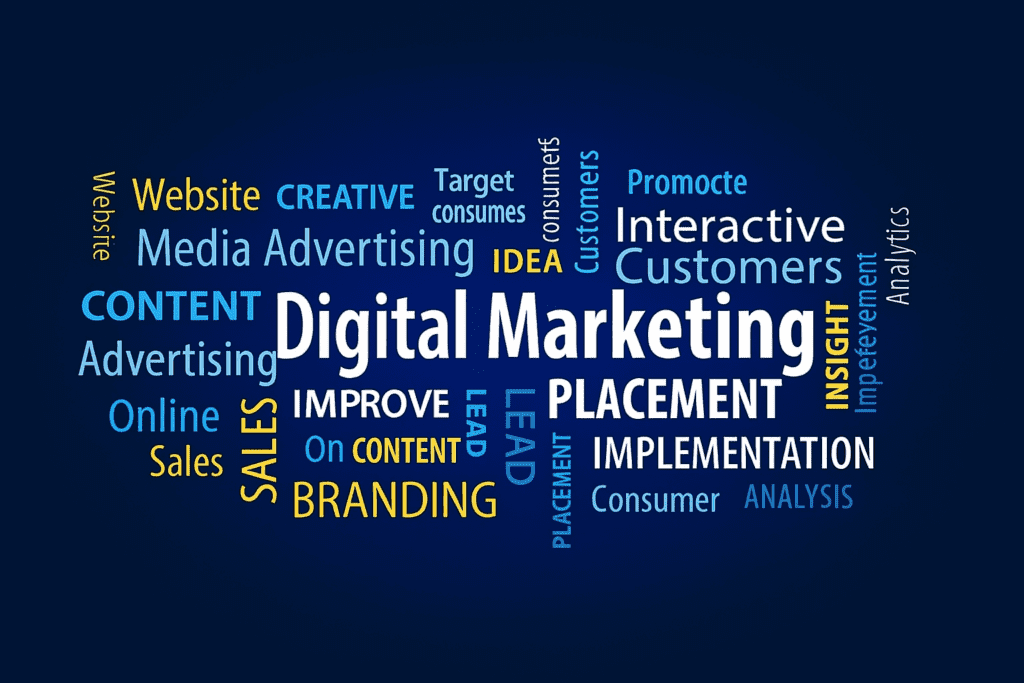
You’ll study the art of digital storytelling and persuasion through engaging blog articles and enticing social media campaigns. Prepare to unleash your creativity, hone your writing skills, and learn the tactics that will distinguish you in the competitive world of digital marketing.
Digital Marketing Syllabus: Strategy & Planning
A strong digital marketing syllabus always includes strategy as a core component.
First, learners explore audience research using modern tools and data insights. Next, competitor analysis helps identify opportunities and gaps in the market.
After that, goal setting becomes essential. These goals may include increasing traffic, generating leads, or improving conversions.
Furthermore, this digital marketing syllabus teaches how to build marketing funnels and choose the right channels. As a result, learners can create strategies focused on ROI rather than vanity metrics.
Digital Marketing Syllabus: Website Development & Optimization
Another important part of the digital marketing syllabus is website development and optimization.
A website must be fast, mobile-friendly, and user-focused. Therefore, this module covers responsive design, Core Web Vitals, and user experience improvements.
In addition, learners study conversion rate optimization techniques such as landing page design and call-to-action placement.
As a result, the digital marketing syllabus ensures that learners can turn website visitors into paying customers.
Digital Marketing Syllabus: Content Marketing

Content marketing continues to be a powerful strategy. However, the approach has changed significantly in recent years.
Now, marketers combine AI-generated drafts with human creativity. This hybrid model ensures both efficiency and originality.
For example, content can include blogs, videos, short-form reels, infographics, and podcasts. Additionally, building topical authority through content clusters has become essential.
Moreover, content should always align with user intent. Instead of writing generic posts, marketers now focus on solving specific problems.
Consequently, high-quality content helps build trust, improve rankings, and drive consistent traffic.
Through strategic distribution across various channels, content marketing helps drive brand awareness, increase website traffic, improve search engine visibility, and ultimately drive profitable customer actions such as conversions, leads, or sales in the digital landscape.
Digital Marketing Syllabus: Email Marketing
Email marketing remains one of the highest ROI channels. However, modern email strategies rely heavily on automation.
Initially, businesses collect leads through opt-in forms and landing pages. After that, they segment users based on behavior, interests, or demographics.
Subsequently, automated workflows are set up. These may include welcome sequences, drip campaigns, and re-engagement emails.
Furthermore, AI enhances email performance by optimizing subject lines and send times. As a result, open rates and conversions improve significantly.
Overall, email marketing has evolved into a system for building long-term relationships rather than sending one-time messages.
Create tailored and compelling material that appeals to subscribers’ interests. Create compelling subject lines to enhance open rates and stimulate conversation.
Automate email processes for welcome sequences, drip marketing, and abandoned cart notifications. Analyze variables such as open rates, click-through rates, and conversions to optimize campaigns and increase performance.
Search Engine Marketing focuses on paid advertising to drive targeted traffic. Unlike SEO, it delivers faster results.
Typically, platforms like Google Ads and YouTube Ads are used. These allow businesses to target users based on keywords, interests, and behavior.
In addition, ad copywriting and landing page optimization play a key role in campaign success.
Notably, 2026 introduces AI-based bidding strategies and automated creatives. Therefore, campaigns become more efficient and data-driven.
As a result, SEM is now less about manual control and more about strategic optimization.
According to Google Search Central, following SEO best practices is essential for improving visibility in search results.

Pay-Per-Click (PPC) advertising requires advertisers to pay a fee each time their ad is clicked. This technique enables businesses to bid on terms related to their target audience, resulting in adverts appearing at the top of search engine results or on other websites.
Keyword research and ad copywriting are crucial for PPC success. Effective keyword research ensures targeting of relevant terms, while compelling ad copywriting captures attention and encourages clicks. Advertisers must continuously refine their keyword selection and ad messaging to optimize performance.
Mobile Marketing
With the increasing use of smartphones, mobile marketing has become essential. In fact, most users now interact with brands through mobile devices.
To begin with, businesses must ensure mobile-friendly websites. At the same time, app marketing strategies help increase downloads and engagement.
Moreover, push notifications and SMS campaigns enable direct communication with users. Additionally, location-based targeting improves relevance.
Therefore, adopting a mobile-first approach is no longer optional—it is necessary for success.

Push notifications, mobile-responsive websites, and mobile-exclusive promotions are some of the strategies used to effectively engage consumers and drive targeted activities like app downloads, purchases, or store visits in the dynamic mobile landscape.
Digital Marketing Trends and Future Outlook
A modern digital marketing syllabus must cover analytics and performance tracking.
Looking ahead, several trends are shaping the future of digital marketing.
Firstly, AI and automation will continue to dominate. Secondly, voice search is becoming more popular with smart devices.
At the same time, video content—especially short-form—is gaining massive traction. Additionally, privacy regulations are changing how data is collected and used.
Furthermore, technologies like AR and VR are creating immersive experiences. Meanwhile, social commerce is transforming how users shop online.
As a result, marketers must stay updated and adapt quickly to remain competitive.

Marketers must adapt their tactics to effectively leverage future digital marketing trends such as AI and machine learning for personalization, voice search optimization, video content dominance, and social commerce integration, with a focus on sustainability.
The future of digital marketing will witness further integration of AI and automation, a greater emphasis on tailored experiences, continuous expansion of video and voice content, tighter data protection regulations, and a shift toward more sustainable and ethical marketing tactics.