How to do SEO in 2026 Full Overview And Tutorial
1. Introduction to SEO
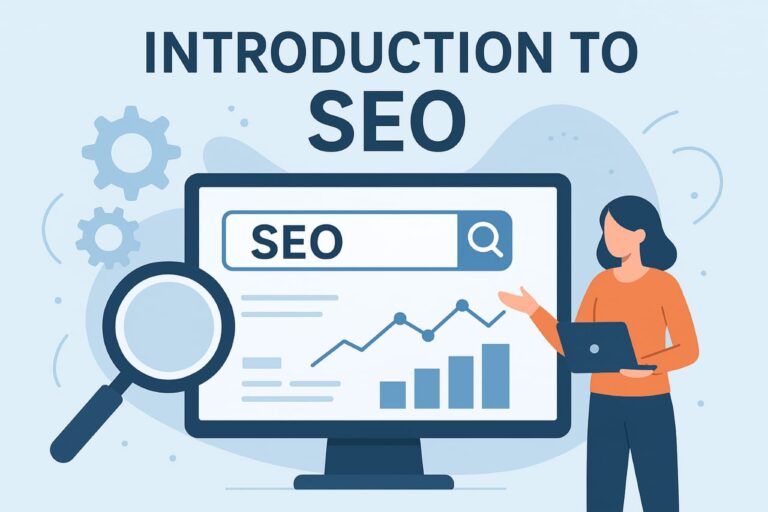
SEO in 2026 focuses on making websites search-engine and user friendly to rank higher on platforms like Google and Bing. Since users mostly click top results, effective SEO improves first-page visibility, driving more traffic, customers, and business growth.
I.What Does SEO Mean?
SEO, or Search Engine Optimisation, is the process of improving a website to rank higher on search engines like Google. It involves using relevant keywords, quality content, user-friendly design, and trusted links to attract more traffic and grow your business.
II. Why SEO Matters in 2026
SEO remains the lifeblood of the web in 2026 as search evolves with AI and voice assistants. Strong SEO ensures visibility, reaches the right audience, and delivers long-term organic traffic, offering lasting value while paid advertising continues to grow more expensive.
SEO helps build trust and authority by improving user experience, site speed, content quality, and mobile performance. In 2026, as users search for blogs, videos, products, and AI answers, strong SEO ensures your content is the first they discover.
III. How Search Engines Work
Google and other search engines keep track of, make sense of, and arrange data from billions of web pages. They send out crawlers, which are automated bots, to examine websites and gather data. After that, all this data is kept in Google’s index, which is like a huge digital library containing all web pages.
When a user submits a search query, Google analyzes it using complex algorithms to deliver the most relevant and high-quality results. These algorithms evaluate factors like keywords, content quality, page speed, mobile-friendliness, and backlinks to determine rankings.
2. Types of SEO
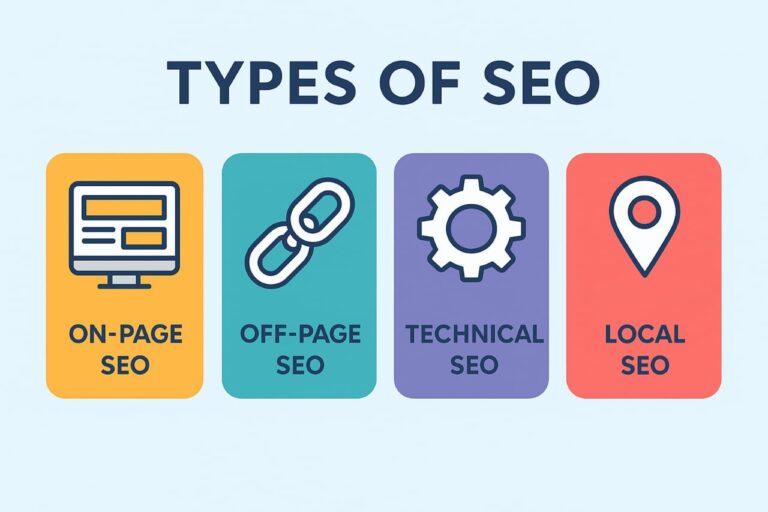
I. On-Page SEO
On-page SEO includes all actions taken within a webpage to improve search rankings. It focuses on keywords, title tags, meta descriptions, headings, URL structure, image optimization, and high-quality content to help search engines understand and rank pages better.
On-page SEO also means caring for the user experience, speeding up a page, making it mobile-friendly, and easy navigation. If these elements are properly optimised, search engines will be able to figure out what your content is and that it deserves to be ranked for the users’ queries.
In other words, on-page SEO is about making your site great in every manner possible so that you can attract more organic traffic from Google.
II. Off-Page SEO
Off-page SEO refers to where you perform all the actions that are outside your website but are aimed at increasing your website rank in search engines.
Thus, it is mainly about the website’s authority and trust that is achieved through how to do SEO in 2026 the generation of backlinks – that is, links from other sites leading to your site. The more quality backlinks that point to your site, the more Google sees your site as trustworthy.
Off-page SEO is all the work that is done outside the website and aimed at bettering the position of the site in the ranking list. Examples of off-page SEO activities are social media sharing, brand mentions, influencer marketing, guest posting, and online reviews. These external indications to search engines that a website is a valuable, trustworthy, and a widely used one.
III. What Is Technical SEO
Technical SEO focuses on optimizing a website’s backend so search engines can crawl and index it easily. It includes site speed, mobile-friendliness, HTTPS security, clean URLs, sitemaps, fixing errors, and using schema markup to help search engines understand content better.
Simply put, technical SEO should be the means by which your website is how to do SEO in 2026 functioning properly “behind the screen” so that search engines can easily access and rank your pages.
IV. What Is Local SEO
Local SEO helps businesses appear in nearby Google searches. Therefore, it has become very important in 2026.
Moreover, local SEO improves visibility on Google Maps and local listings. As a result, nearby customers can find businesses more easily.
Businesses should optimize their Google Business Profile with accurate details, including:
- business name,
- address,
- phone number,
- and working hours.
Additionally, customer reviews improve trust and local rankings significantly.
Businesses should also use location-based keywords naturally. For example:
- “digital marketing course in Janakpuri”
- or “best café near me”
help improve local visibility.
Furthermore, business information should remain consistent across all local directories and platforms.
3. How Search Engines Rank Websites
I. How Search Engines Rank Websites
Crawling is the first step search engines use to discover websites. Googlebots scan and follow links to find new or updated pages. A well-structured site and internal links improve crawling, and submitting an XML sitemap helps Google find and understand your content faster.
II. Indexing: How Google Saves Your Pages
Indexing is how Google organizes information collected during crawling. It analyzes page content, images, and media to understand the topic. Pages that follow Google’s guidelines are stored in its index and become eligible to appear in search results.
III. Ranking: How Google Decides Position
Ranking is how Google decides the order in which pages appear in search results. After crawling and indexing, Google uses complex algorithms to evaluate relevance and usefulness based on factors like keywords, backlinks, page speed, mobile-friendliness, and user experience.
4. On-Page SEO Techniques
How To Do SEO in 2026
I. Keyword Research Basics
Keyword research is the process of finding the words and phrases people use when searching online. It helps you understand audience intent, create relevant content, and identify high-volume, low-competition keywords that are easier to rank for and attract targeted traffic.
How To Do SEO in 2026
II. Proper Use of Headings (H1, H2, H3)
Headings play an important role in SEO because they improve content structure and readability. Moreover, they help search engines understand page content more effectively.
The H1 tag represents the main title of the page. Therefore, it should clearly explain the page topic.
H2 tags divide content into major sections. As a result, readers can understand topics more easily.
Meanwhile, H3 tags organize subtopics under H2 headings. Similarly, H4 and H5 tags help structure smaller sections when necessary.
Proper heading structure improves:
- readability,
- user experience,
- content organization,
- and SEO performance.
Additionally, headings make content easier to scan quickly. Therefore, visitors spend less time searching for important information.
Search engines also understand content hierarchy better through structured headings. Consequently, well-organized content often performs better in search results.
How To Do SEO in 2026
III. Image Optimization (Alt Text, Size)
Image optimization remains important for SEO in 2026 because it improves website speed and user experience.
Firstly, businesses should compress images without reducing quality. As a result, web pages load faster.
Fast-loading websites improve:
- engagement,
- user experience,
- and SEO performance.
Additionally, businesses should use descriptive filenames like:digital-marketing-course.jpg
instead of random names like:IMG123.jpg
Every image should also include proper ALT text. This helps:
- search engines,
- accessibility tools,
- and visually impaired users.
Consequently, optimized images improve SEO visibility and Google Image rankings.
5. Off-Page SEO Techniques
Off-page SEO includes actions taken outside your website to build authority and trust. Quality backlinks from reliable sites are key, along with social media sharing, guest blogging, influencer outreach, brand mentions, and reviews. These signals show search engines your site is valuable and relevant.
Simply put, off-page SEO revolves around the enhancement of your website’s image all over the web, which results in higher ranking in the search results
How To Do SEO in 2026
I. How to Build High-Quality Backlinks
Off-page SEO focuses on activities outside your website that build authority and trust. Earning quality backlinks, along with social media sharing, guest blogging, influencer outreach, brand mentions, and reviews, signals to search engines that your site is credible, relevant, and valuable to users.
How To Do SEO in 2026
II. Social Signals & Brand Mentions
Social signals and brand mentions boost off-page SEO by showing search engines your site’s popularity and trustworthiness. Likes, shares, comments, and follows create social signals, while mentions of your brand online—even without links—demonstrate relevance and authority.
How To Do SEO in 2026
III. Guest Posting
Website speed optimization improves user experience and SEO rankings. Techniques include compressing images, minifying CSS/JS, enabling caching, choosing good hosting, and using a CDN. Faster sites reduce bounce rates, attract more visitors, and rank higher on Google.
6. Technical SEO
I. Website Speed Optimization
Website speed optimization ensures fast loading for users and search engines, enhancing satisfaction and reducing bounce rates. Key techniques include image compression, minifying CSS/JS, enabling caching, choosing reliable hosting, and using a CDN to boost SEO rankings.
II. Mobile-Friendly Website
A mobile-friendly website works smoothly on smartphones and tablets, with responsive design, readable text, properly sized images, and tappable buttons. Fast loading and seamless usability on small screens improve user experience and are key factors for Google rankings.
7. Local SEO
Google My Business Optimization
GMB optimization improves your business profile for higher local search and Google Maps rankings. It includes accurate info like name, address, phone, website, hours, and services, making it easier for nearby customers to find and choose your business online.
8. How to Rank a Website on Google (Step-by-Step Guide)
How To Do SEO in 2026
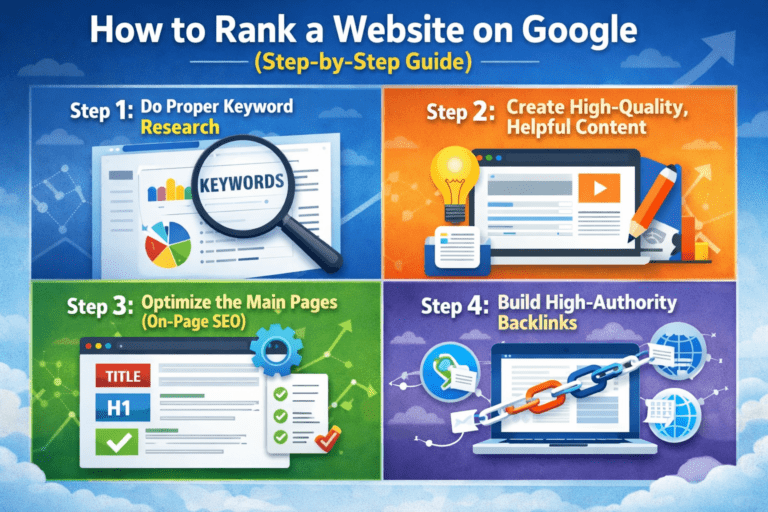
Step 1: Do Proper Keyword Research
The first step of SEO is properly doing keyword research to understand what words and phrases people use to search for things on Google. This way you can pick topics that fit the user intent and attract the right audience.
Keyword research is essential for content strategy, revealing what your audience searches for. It helps create content that ranks in search engines, meets user intent, attracts targeted traffic, and provides value, ensuring your pages engage visitors and satisfy both users and SEO requirements.
How To Do SEO in 2026
Step 2: Create High-Quality, Helpful Content
To rank on Google, create high-quality, helpful content that clearly answers user questions and provides real value. Focus on original, informative articles that solve problems, offer useful tips, and align with your audience’s search intent for better engagement and SEO performance.
Employ easy words, write short paragraphs, and if possible, put pictures or give examples so that your content is attractive to the usersGoogle gives preference to content that is thoroughly researched, correct, and, above all, helpful to the readers. Simply put, if your content is of great help to people, your chances to be ranked by Google will be very high.
How To Do SEO in 2026
Step 3: Optimize the Main Pages (On-Page SEO)
On-page SEO helps search engines understand website content better. Therefore, it improves rankings and user experience.
Businesses should place keywords naturally in:
- title tags,
- URLs,
- headings,
- meta descriptions,
- and content.
However, keyword stuffing should always be avoided.
Content should remain simple and easy to read. Therefore, businesses should use:
- short paragraphs,
- bullet points,
- and proper headings.
Additionally, optimized images, ALT text, internal links, and mobile-friendly design improve SEO performance significantly.
How To Do SEO in 2026
Step 4: Build High-Authority Backlinks
High-authority backlinks are powerful for boosting Google rankings. They act as votes of confidence from trusted sites. To earn them, create valuable content, engage in guest posting, and leverage influencer marketing, signaling to search engines that your site is credible and trustworthy.
Learn Digital Marketing from GICT and Supercharge your growth
Conclusion
SEO in 2026 is no longer about keyword stuffing or shortcuts. Instead, it focuses on helping users genuinely.
Search engines have become smarter and more user-focused. Therefore, websites must provide valuable and relevant experiences.
Successful SEO now combines:
- technical optimization,
- quality content,
- strong authority,
- and user experience.
Businesses should also understand:
- on-page SEO,
- off-page SEO,
- technical SEO,
- and local SEO.
Moreover, keyword research guides SEO strategy effectively, while quality content builds trust and engagement.
Additionally, backlinks, on-page optimization, and helpful content improve long-term rankings naturally.
The main goal of SEO in 2026 is simple: create real value for users. Businesses that remain authentic and consistent will continue growing successfully.