How Do Brands Make You Buy Without Directly Selling Anything?
You go to Instagram to check a message. A few minutes later, you’re watching a video about a perfume, reading the comments, and checking its price. You weren’t planning to buy anything, but now you’re curious about a product you hadn’t even heard of earlier. Brands don’t always need to run a discount campaign or tell people to purchase something. These digital persuasion techniques help businesses turn that first moment of curiosity into genuine interest.
Think about the last time you tried a new restaurant or bought something because a friend recommended it. The decision probably started before you reached the checkout. Online marketing works in a similar way: it gives people reasons to remember a brand before they’re ready to spend money.
What Are Digital Persuasion Techniques?

Digital persuasion techniques are methods businesses use online to influence how people discover, evaluate, and choose products. Imagine you’re shopping for headphones. You watch a comparison video, read a few reviews, and notice the same brand in someone’s Instagram Story. Each interaction answers a question or makes the product more familiar.
By the time you visit the website, you may already have a preference. The brand hasn’t necessarily persuaded you with one big advertisement. Several small interactions have helped shape your opinion. The important distinction is that good persuasion provides useful information and lets customers decide for themselves.
How Digital Persuasion Techniques Influence Buying Decisions
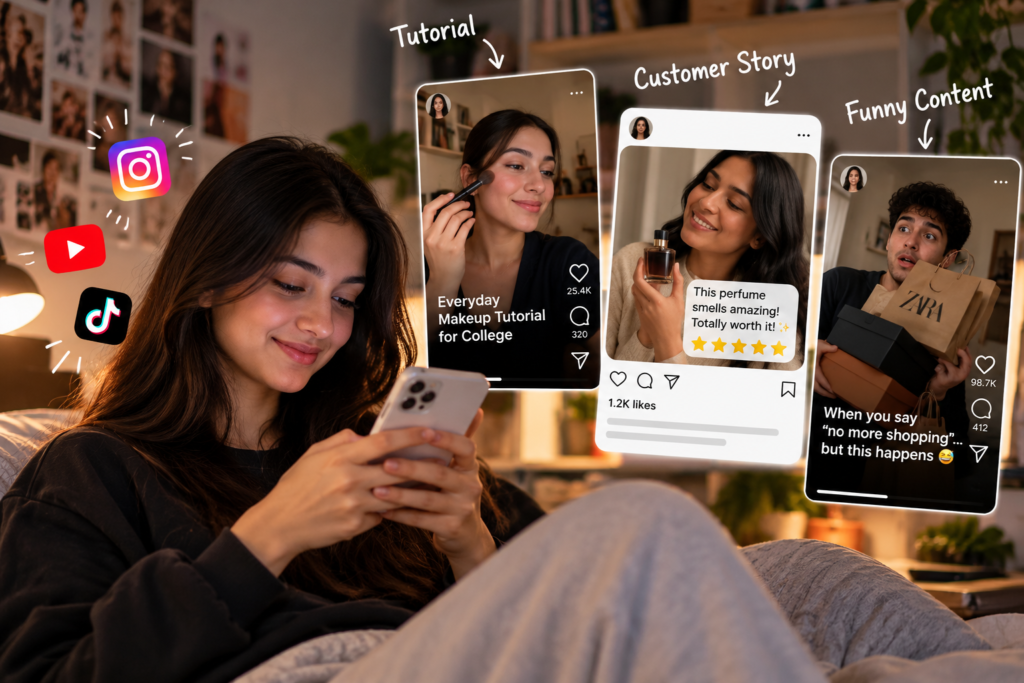
People don’t open social media because they want to see advertisements all day. They want entertainment, useful information, and content they can relate to. Brands that understand this create posts that fit naturally into those interests. A product might appear in a tutorial, a customer story, or a funny situation rather than a traditional sales pitch.
a. Storytelling as a Digital Persuasion Technique
A product description can tell you what something does. A story can show you why it matters. Imagine a clothing brand sharing the experience of a student preparing for their first job interview. Instead of simply displaying a formal shirt, the brand shows the student choosing an outfit and feeling more prepared.
The situation is familiar, so the product becomes easier to relate to. That is the value of storytelling: it gives customers a reason to care about something beyond its features.
b. Emotional Marketing and Digital Persuasion Techniques
Some advertisements stay in your memory because they make you laugh or remind you of someone important. Brands use emotions to make their messages memorable. A travel company might show a family enjoying its first holiday together, while a fitness brand could celebrate someone’s progress after months of effort.
The product is still important, but the experience gives people another reason to remember the brand.
c. Building Trust Through Social Proof and Customer Reviews
When buying perfume online, you can’t smell it through your screen. You have to rely on fragrance descriptions, customer feedback, and other information to decide whether it might suit you. Similar problems occur when buying clothes, skincare, or electronics. Customers want to know what happens after the product arrives.
Honest reviews, customer photographs, and detailed feedback help answer those questions. Businesses that respond to complaints openly can also show that they take customer experiences seriously.
d. Using Influencer Marketing to Shape Consumer Choices
A creator demonstrating a product can answer questions that a conventional advertisement might leave unanswered. For example, a technology reviewer can show how a phone performs during everyday use. A beauty creator can demonstrate how a foundation looks under different lighting conditions.
These recommendations become more useful when the creator understands the product and has an audience that could benefit from it. Paid partnerships should be disclosed clearly.
7 digital persuasion techniques Brands Use to Influence Customers

1) Scarcity Marketing: Making Products Feel Exclusive
Limited-edition sneakers, festive gift boxes, and small-batch fragrances can attract attention because customers know they might not be available forever. When stock really is limited, some buyers may decide to purchase sooner. However, fake stock warnings and countdown timers that keep resetting can make a business look dishonest.
2) The Fear of Missing Out (FOMO)
FOMO is the feeling that you might miss an opportunity other people are enjoying. Someone interested in a concert might book tickets after learning that only a few remain. Brands use similar messages for product launches and seasonal offers. The approach should communicate a genuine opportunity, not make customers feel that they need every new product to fit in.
3) Reciprocity: Giving Value Before Asking for a Sale
Suppose a business publishes a free guide that solves a problem you’ve been struggling with. You use the advice, find it helpful, and remember the business when you need a related service. That is one reason free resources can work well in marketing. Businesses can share tutorials, samples, checklists, or practical advice before introducing paid products. The free resource should be useful even if the reader never makes a purchase.
4) digital persuasion techniques: Making Every Customer Feel Understood
Someone shopping for running shoes probably doesn’t want recommendations for unrelated products. Online stores can make browsing more useful by suggesting items based on customers’ stated preferences or previous purchases. Newsletters can also offer information relevant to a reader’s interests. Personalisation works best when it feels helpful rather than intrusive. Businesses should respect customer privacy and explain how personal information is used.
5) Visual Psychology: Using Colours, Images, and Design
Imagine visiting a perfume website with blurry photographs, confusing menus, and product descriptions that tell you very little. You might leave without considering the fragrance. Now imagine clear photographs, readable descriptions, and prices that are easy to find. You can compare products without struggling to understand the website. Good design removes unnecessary obstacles. Colours, typography, and imagery should suit the brand and make the shopping experience easier.
6) Content Marketing: Educating Customers Before Selling
People often search for answers before spending their money. Someone choosing a perfume might want to understand fragrance notes or the difference between Eau de Parfum and Eau de Toilette. A fragrance brand can answer those questions through a blog or video. Readers get useful information, while the business has an opportunity to demonstrate its knowledge. The content should answer the question properly rather than disguise an advertisement as advice.
7) Community Building: Turning Customers into Brand Advocates
Some customers enjoy talking about products they like. They share photographs, recommend items to friends, or answer questions from other buyers. Brands can encourage these conversations through customer groups, workshops, and online discussions. When people genuinely enjoy participating, recommendations can happen naturally.
How Digital Persuasion Techniques Work on Social Media

A person might discover a jacket in an Instagram Reel, read the comments, and visit the store without ever searching for the brand. Social media has made this kind of discovery part of everyday shopping. However, getting attention is only the beginning. The content still needs to be relevant to the people who see it.
Why People Trust Recommendations More Than Advertisements
A friend’s recommendation can feel more personal than an advertisement because you understand that person’s preferences. If your friend recommends headphones they’ve used for months, you can ask about battery life, comfort, and sound quality. Recommendations can still be biased or sponsored, so customers should look for transparency and consider different opinions.
How Reels, Short Videos, and Viral Content Shape Preferences
Short videos can demonstrate products in seconds. A clothing brand might show three ways to style a jacket, while a cooking creator demonstrates a kitchen tool. Humour can also make people stop scrolling. But a video with millions of views doesn’t necessarily generate sales. Reaching people who are genuinely interested in the product may be more valuable.
The Role of User-Generated Content in Building Brand Trust
Customer photographs, unboxing videos, and reviews show products outside a professional advertising setup. These examples can help buyers understand appearance, packaging, and everyday use. Businesses should obtain permission before reusing customer content and should never misrepresent someone’s experience.
Real-Life Examples of Digital Persuasion Techniques

Apple: Selling a Lifestyle, Not Just a Product
Apple often demonstrates how its devices fit into everyday life, from taking photographs to creating music. This helps customers imagine what they could do with the product instead of focusing entirely on technical specifications.
Nike: Using Inspiration to Influence Purchase Decisions
Nike frequently connects its products with sport, determination, and personal achievement. Campaigns featuring athletes overcoming challenges create a broader story about effort and ambition. People who identify with those values may develop a stronger connection with the brand.
Zomato: Connecting with Customers Through Relatable Content
Zomato has used food-related humour and topical social media posts to connect with audiences. A post about late-night cravings can feel familiar without directly asking people to place an order. This keeps the brand part of everyday online conversations.
How Digital Persuasion Techniques Increase Conversions

Understanding the Customer Journey
A student exploring career options after Class 12 might read a career guide, compare training options, check reviews, and eventually contact an institute. Each stage brings different questions. Marketers need to provide relevant information instead of expecting every visitor to purchase immediately.
Creating Content That Builds Desire and Trust
Customers want clear answers about what they’re buying. Useful product descriptions explain benefits, while honest demonstrations and genuine testimonials help set realistic expectations. The goal is to make the decision easier without promising results the business cannot deliver.
Using Calls to Action Without Sounding Pushy
A call to action, or CTA, tells visitors what they can do next. Examples include “Explore the collection”, “Read the complete guide”, and “Book a demonstration”. The wording should suit the page and the customer’s level of interest.
Ethical vs. Manipulative Digital Persuasion Techniques in Digital Marketing
There is a difference between helping customers make decisions and pressuring them into purchases. Ethical marketing uses accurate claims, genuine reviews, and transparent pricing. Manipulative marketing relies on fake countdowns, hidden charges, or exaggerated promises. A quick sale isn’t worth much if the customer feels tricked and never returns. Respecting customers is essential for lasting business relationships.
How to Apply Digital Persuasion Techniques to Your Brand
Start by listening to your customers. What do they ask before buying? What makes them hesitate? Which details are missing from your website? Use those answers to create helpful content, improve product photographs, collect genuine reviews, and make important information easier to find. Then check the results. Enquiries, purchases, repeat orders, and customer feedback tell you more about business performance than views alone.
Want to Turn Your Marketing Knowledge into Practical Skills?
Understanding how brands influence buying decisions is just the beginning. At GICT (Global Institute of Computer Technologies), you can explore practical skills in digital marketing, data analytics, graphic designing, video editing, and more. Learn how these skills are used in real-world projects and discover new possibilities for your career.
Why the Best Marketing Makes Customers Want to Buy
A purchase often begins with something small: a helpful article, a friend’s recommendation, or a demonstration that answers a question. When used responsibly, digital persuasion techniques help businesses explain their value and connect with people without turning every interaction into a sales pitch. The goal isn’t to convince everyone to buy. It’s to help the right customers understand what a product offers and decide whether it meets their needs. That is how a business can build trust beyond a single transaction.
FAQs
They are methods businesses use online to influence customer decisions through storytelling, reviews, useful content, and personalised recommendations.
Brands use educational content, creator recommendations, customer experiences, and relatable social media posts to introduce products naturally.
Trust, emotions, convenience, personal preferences, and other people’s experiences can influence how customers evaluate products.
Relatable videos, genuine customer content, storytelling, and relevant influencer partnerships can help brands connect with the right audience.
Small businesses can publish useful blogs, demonstrate products, collect honest reviews, and answer customer questions without spending heavily on advertising.