Digital Marketing Strategy for Small Businesses: Grow Online
A digital marketing strategy for small businesses helps owners build visibility, attract the right customers, and generate opportunities online. Businesses can use search engines, social media, content, email, websites, and paid advertising to reach potential customers.
A strong online presence allows small businesses to connect with customers at different stages of the buying journey. With the right planning, even businesses with limited budgets can create measurable marketing activities.
What Is a Digital Marketing Strategy for Small Businesses?
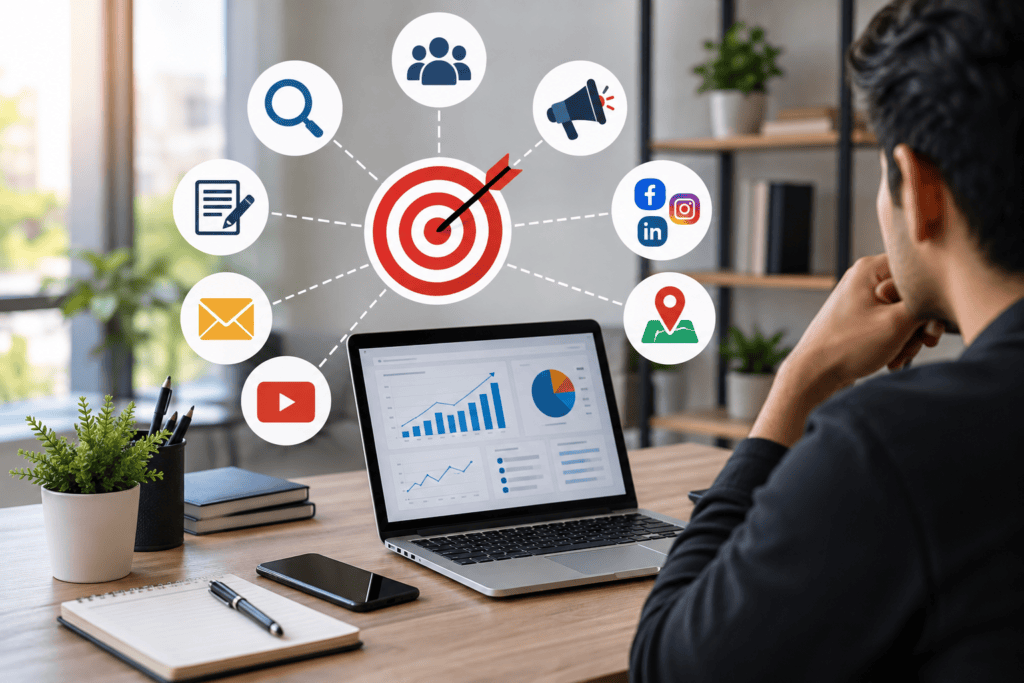
A digital marketing strategy for small businesses is a structured plan for promoting products or services through digital channels. It connects business goals with activities such as SEO, social media marketing, content creation, email marketing, local SEO, video, and online advertising.
A practical plan should identify the target audience, marketing objectives, budget, content approach, selected channels, and performance indicators. This makes marketing more focused and helps businesses use their available resources effectively.
Why Is Digital Marketing Important for Small Businesses?

A digital marketing strategy can help small businesses build online visibility and reach potential customers beyond their immediate surroundings. Customers can discover a business, compare its offerings, read reviews, and contact the company online.
Digital channels also provide measurable information. Businesses can monitor website traffic, search rankings, engagement, leads, conversions, and advertising performance to understand what works and where to improve.
How to Create a Digital Marketing Strategy for Small Businesses?

Creating a digital marketing strategy for small businesses starts with understanding customers and establishing measurable objectives. The following steps provide a practical framework that can be adapted to different industries, budgets, and business models.
The goal is not to use every available platform. Instead, businesses should select channels that match their audience, resources, products, services, and objectives
Define Your Target Audience
Start by identifying who is most likely to purchase your products or services. Consider demographics, location, interests, challenges, buying behaviour, and the questions customers ask before making a decision.
A clear audience profile makes your digital marketing strategy for small businesses more focused. It also helps determine your messaging, content topics, advertising audiences, and choice of digital platforms.
Set Clear Digital Marketing Goals
Set specific goals such as increasing website traffic, generating leads, improving online sales, increasing local enquiries, or building brand awareness. Give every major goal a measurable target and time frame.
Your digital marketing strategy for small businesses becomes easier to manage when goals are connected to key performance indicators. Track metrics such as leads, conversions, customer acquisition cost, engagement, and return on advertising spend.
Build a Professional Business Website
Your website is often the central destination for online customers. Make sure it loads quickly, works properly on mobile devices, has simple navigation, and clearly explains your products or services.
A professional website should include accurate business information, useful service or product pages, strong calls to action, contact options, and relevant visuals. These elements can improve user experience and conversion opportunities.
Optimise Your Website for Search Engines
SEO helps your website appear when potential customers search for relevant products, services, questions, or businesses. Focus on useful content, keyword relevance, page titles, headings, internal links, and technical performance.
A digital marketing strategy for small businesses should treat SEO as an ongoing activity rather than a one-time task. Monitor search performance, update important pages, fix technical issues, and publish content that addresses customer needs.
Use Social Media Marketing
Choose social media platforms according to where your target audience is active and what type of content suits your business. Share educational posts, product demonstrations, customer stories, behind-the-scenes content, offers, and short-form videos.
Consistency is important, but businesses should prioritise useful content over simply posting frequently. Respond to comments and messages, and review engagement data to understand which topics and formats perform well.
Create Valuable Content
Content marketing can answer customer questions and demonstrate your expertise before someone contacts your business. Blog posts, guides, videos, case studies, checklists, and FAQs can support different stages of the customer journey.
A digital marketing strategy for small businesses should focus on content that provides genuine value. Address real customer problems, use clear language, and include relevant calls to action that guide readers toward the next step.
Invest in local SEO.
Local SEO is particularly useful for businesses serving a specific city, neighbourhood, or service area. Keep your Google Business Profile accurate, maintain consistent business information, encourage genuine reviews, and create relevant local website content.
Use location-based keywords naturally in appropriate pages and content. Business categories, opening hours, photographs, contact details, and customer reviews can also help potential customers evaluate a local business.
Use Email Marketing to Build Customer Relationships
Email marketing provides a direct way to communicate with subscribers and existing customers. Useful emails can include welcome messages, educational information, product updates, special offers, reminders, and recommendations.
Segment your audience when possible and avoid sending irrelevant messages too frequently. Monitor clicks, conversions, and unsubscribes to improve future campaigns and understand customer engagement.
Try Paid Advertising for Faster Reach
Paid advertising can help businesses reach selected audiences through search engines and social media platforms. Start with a clear objective, controlled budget, relevant landing page, and appropriate conversion tracking.
A digital marketing strategy for small businesses should not rely entirely on paid traffic. Test different audiences, messages, creatives, and landing pages while comparing paid results with organic marketing activities.
Use Video Marketing to Engage Your Audience
Videos can demonstrate products, explain services, answer common questions, introduce team members, and show how a business operates. Short-form videos can support discovery, while longer videos can provide more detailed information.
Keep each video focused on one clear idea and make the opening seconds useful or engaging. Captions can improve accessibility, while a relevant call to action can guide viewers toward another step.
Measure the Success of Your Digital Marketing Strategy for Small Businesses
Measurement helps businesses identify which activities contribute to their objectives. Use website analytics, search performance reports, social media insights, CRM data, and advertising dashboards to monitor results.
Review your digital marketing strategy for small businesses regularly and compare performance against your goals. Identify strong-performing channels, reduce wasted effort, and test improvements based on reliable data.
Common Digital Marketing Mistakes Small Businesses Should Avoid

Common mistakes include trying to use every social media platform, targeting an overly broad audience, ignoring mobile users, publishing inconsistently, and failing to track conversions. Focusing only on likes and followers can also distract from meaningful business outcomes.
Avoid expecting immediate results from every channel. A digital marketing strategy for small businesses works better when businesses use realistic goals, consistent execution, accurate measurement, and regular optimisation.
How Much Does a Digital Marketing Strategy for Small Businesses Cost?
Digital marketing costs vary according to the business model, industry, goals, selected channels, internal skills, and advertising budget. Businesses may begin with organic SEO, social media, content, and local optimisation before adding paid campaigns or specialist services.

A digital marketing strategy for small businesses can be scaled as the business grows. Resources should be allocated according to measurable priorities, with regular reviews of the value generated by each major marketing activity.`
How Long Does It Take to See Results From Digital Marketing?

The timeline depends on the marketing channel, competition, website quality, budget, offer, audience, and consistency. Paid advertising can generate traffic quickly, while SEO and content marketing generally require sustained effort to build organic visibility.
Businesses should set both short-term and long-term milestones rather than expecting one universal timeline. Monitor impressions, rankings, engagement, traffic, leads, and conversions to understand progress.
Digital Marketing Strategy for Small Businesses: Key Takeaways

A digital marketing strategy for small businesses should connect audience research, clear goals, a professional website, SEO, social media, content, local visibility, email, advertising, video, and analytics.
Start with the channels most relevant to your customers, measure their performance, and improve gradually. Consistency, useful content, customer understanding, and data-driven decisions can help create a stronger online presence.
FAQs
Start by defining your target audience and business objectives before selecting marketing channels. Which digital marketing channel is best? The right channel depends on your audience, goals, industry, resources, and customer behaviour.
SEO can help potential customers discover relevant products and services through search engines.
Paid advertising can be useful when businesses have clear objectives, controlled budgets, relevant landing pages, and conversion tracking.
Social media can help businesses showcase products or services, communicate with customers, share educational content, and build awareness. Businesses should focus on platforms where their target audience is active.
A digital marketing strategy for small businesses is an ongoing process of reaching customers, providing value, measuring performance, and improving marketing activities. The strongest approach starts with clear objectives and an understanding of the target audience.
Conclusion: Build a Strong Digital Presence for Your Small Business
A digital marketing strategy for small businesses is an ongoing process of reaching customers, providing value, measuring performance, and improving marketing activities. The strongest approach starts with clear objectives and an understanding of the target audience.
If you want to develop practical skills in digital marketing, data analytics, advanced Excel, and other career-focused technologies, GICT can help you build relevant skills for today’s digital workplace. Contact GICT today and take the next step toward developing your digital skills and career.