Understanding your audience, setting clear goals, using strong visuals and copy, and continuously testing performance all play a vital role. When you stay consistent and keep optimizing based on data, your social media designs become more impactful, helping your brand grow, connect, and convert over time.
How to Design a High‑Converting Social Media Post
1. Understanding Your Audience
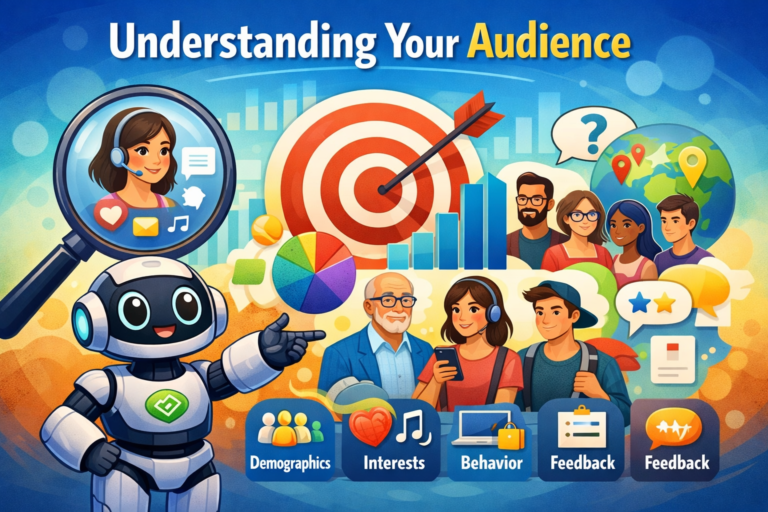
Create effective social media content by understanding your audience. Define who they are, what they want, and their preferences. Apply social media design tips to align visuals, messaging, and layout, ensuring posts resonate, engage, and drive conversions.
A. Defining Your Target Audience
The first step in effective content creation is defining your target audience. Consider demographics such as age, gender, location, interests, and behaviour. Understanding your audience’s profile helps you craft visuals, colours, and messaging that appeal directly to them. Integrating these insights into your social media design tips ensures that every design element supports engagement and brand relevance.
B. Identifying Pain Points and Desires
Identify your audience’s pain points and desires to create content that provides value, solutions, or inspiration. Apply these insights in social media design tips to make visuals meaningful and engaging, boosting likes, shares, and conversions.
2. Setting a Clear Goal for Your Post
Creating high-performing social media content starts with a clear goal. Every post should have a defined purpose, guiding your visuals, copy, and call-to-action. Applying social media design tips ensures that your content not only looks appealing but also drives measurable results.
A. What Is Your Conversion Objective?
Before designing a post, determine the action you want your audience to take. Common objectives include:
Sales – Encourage purchases through compelling visuals and persuasive copy.
Leads – Capture potential customers via forms, downloads, or subscriptions.
Website Traffic – Drive users to your website for more information or content.
Sign-ups – Promote newsletter subscriptions, event registrations, or app downloads.
B. Aligning Visuals and Copy With Your Goal
Once your goal is defined, align every design element and piece of copy to support it. Colors, fonts, imagery, and messaging should reinforce your objective and guide the audience toward the desired action. Using proven social media design tips ensures clarity, engagement, and higher conversion rates.
3. Crafting Compelling Copy
Compelling copy is essential for capturing attention and driving action on social media. By combining strong visuals with persuasive text, you can create posts that engage your audience and support your goals. Applying ensures that your copy complements your design for maximum impact.
A. Attention-Grabbing Headlines
It is necessary to have visual hierarchy when transferring graphic design from web and app interfaces if we want to have a user-friendly experience that is easy to use and intuitive. Users in online environments are making decisions very quickly; therefore, the design has to be the one that tells very clearly what is the most important thing and what should be done next.
B. Writing Persuasive and Concise Text
Keep your text concise, persuasive, and focused on the audience’s needs. Avoid unnecessary words and get straight to the value your post provides. Strong, benefit-driven messaging encourages engagement and aligns seamlessly with social media design tips for visual clarity and readability.
C. Using Calls-to-Action (CTA) Effectively
CTAs guide your audience to take the desired action, such as clicking a link, signing up, or making a purchase. Place CTAs strategically, make them visually distinct, and pair them with clear, actionable language. Effective CTAs ensure your post meets its conversion objectives.
D. Storytelling for Social Media
Storytelling helps create emotional connections with your audience. Share relatable experiences, challenges, or successes to make your content memorable and engaging. Integrating storytelling with enhances both the visual appeal and persuasive power of your posts.
4. Incorporating Multimedia
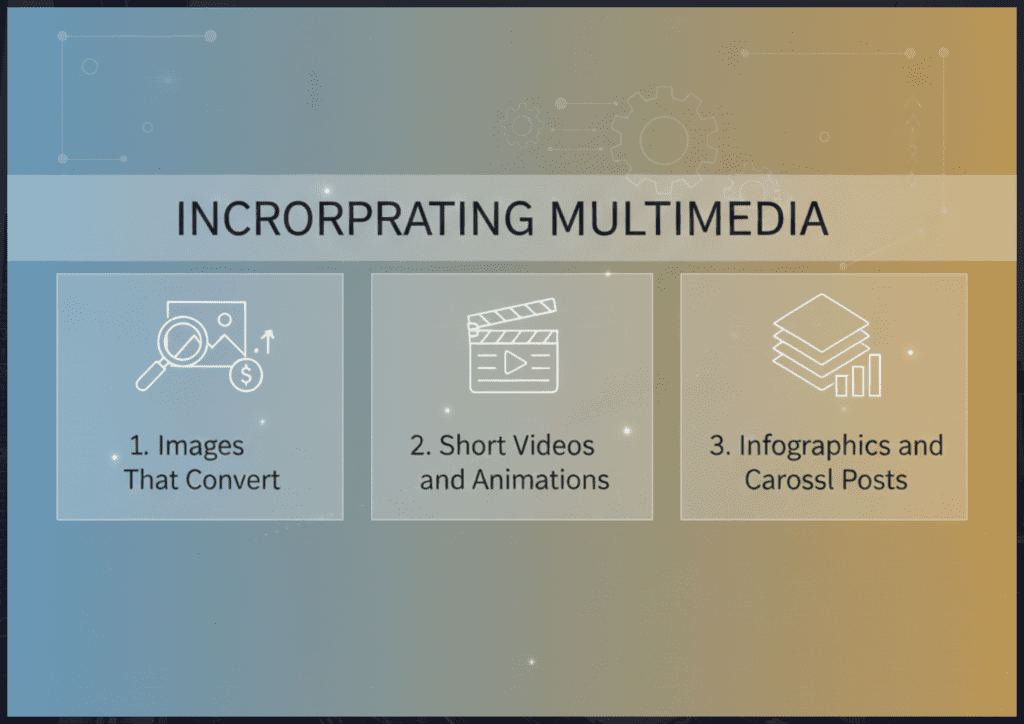
Using multimedia effectively is essential for creating engaging and high-converting social media posts. Visual content captures attention faster than text alone and helps communicate messages more clearly. Applying smart social media design tips ensures that images, videos, and graphics work together to boost engagement and conversions.
A. Images That Convert
High-quality, relevant images play a key role in social media success. Images should support your message, reflect your brand identity, and guide users toward action. Using the right colors, composition, and visual hierarchy—key social media design tips—helps images stand out and encourage clicks, likes, and shares.
B. Short Videos and Animations
Short videos and animations are highly effective for storytelling and engagement. They allow you to explain ideas quickly, showcase products, or highlight benefits in an interactive way. Keeping videos concise, visually clear, and mobile-friendly ensures they align with proven social media design tips and capture attention in fast-scrolling feeds.
C. Infographics and Carousel Posts
Infographics and carousel posts are ideal for sharing information in a structured, easy-to-digest format. They break down complex ideas into simple visuals, encouraging users to swipe and interact. When designed with consistency and clarity, these formats support social media design tips that improve readability, engagement, and content performance.
5. Platform-Focused Design Strategy
High-converting social media design adapts to how users scroll on each platform. Designing with platform behavior in mind increases visibility, engagement, and conversions.
A. Highlighting Key Messages
Highlighting key messages ensures your main idea is seen first. Use size, color contrast, and placement to emphasize headlines or important text. These social media design tips help prevent confusion and make your message clear, even during quick scrolling.
B. Balancing Text and Visuals
A proper balance between text and visuals keeps your post clean and engaging. Too much text can overwhelm users, while too many visuals can distract from the message. Smart social media design tips focus on clarity, ensuring both elements support each other and improve comprehension.
C. Guiding the Viewer’s Eye to the CTA
Effective naturally leads the viewer’s eye toward the call-to-action. Strategic use of alignment, spacing, arrows, or visual cues directs attention to where you want users to click or respond. Following these social media design tips increases engagement and conversion rates.
6. Optimizing for Different Platforms
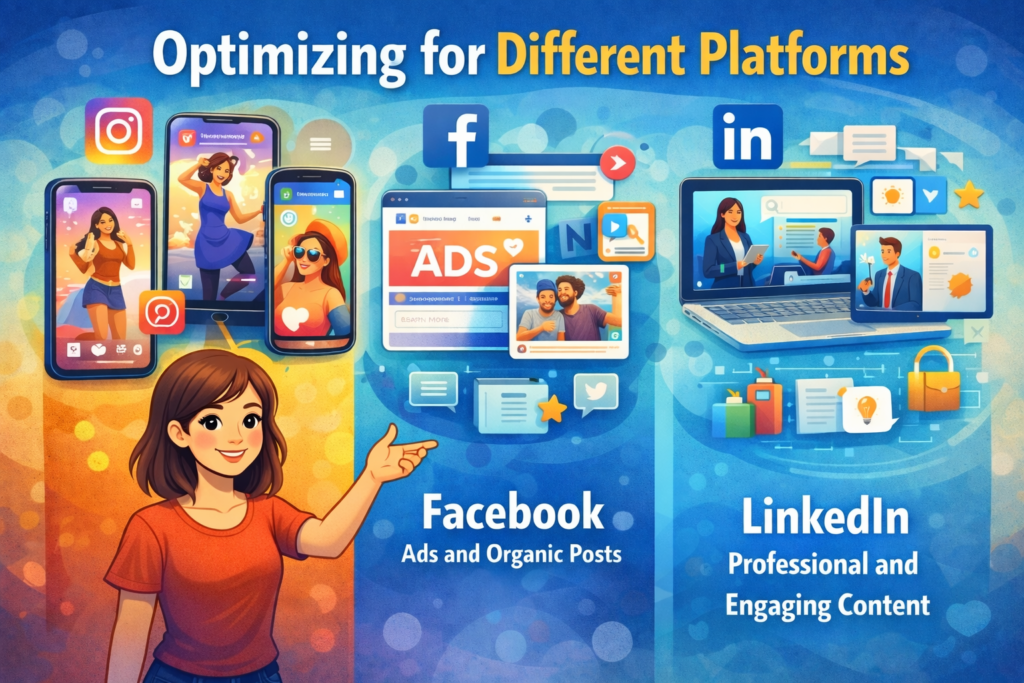
Each social media platform has its own content style, audience behavior, and design requirements. To maximize reach and engagement, it’s important to adapt your visuals and messaging accordingly. Applying platform-specific social media design tips ensures your content performs well across all channels.
A. Instagram: Stories, Posts, and Reels
Instagram is a highly visual platform where aesthetics matter most. Use high-quality images, bold text, and consistent branding in posts. Stories and Reels should be vertical, fast-paced, and engaging within the first few seconds. Following Instagram-focused helps increase views, saves, and interactions.
B. Facebook: Ads and Organic Posts
Facebook content works best when it balances visuals with clear messaging. Ads should highlight benefits quickly with eye-catching visuals and strong CTAs, while organic posts focus on engagement and value. Applying effective social media design tips improves click-through rates and audience interaction.
C. LinkedIn: Professional and Engaging Content
LinkedIn requires a more professional and informative approach. Clean layouts, readable text, and value-driven messaging perform well. Visuals should support thought leadership and credibility. Using tailored social media design tips helps create content that feels authoritative while still engaging.
7. A/B Testing and Analytics
A/B testing and analytics help refine social media content by showing what truly works. Instead of relying on assumptions, data-driven decisions allow you to improve engagement and conversions consistently. Applying analytical social media design tips ensures your content evolves based on real user behavior.
A. Testing Headlines, Colours, and CTA Placement
A/B testing different headlines, colour schemes, and CTA placements reveals which combinations perform best. Small design changes can have a big impact on clicks and engagement. Using these social media design tips helps identify visual and messaging elements that attract attention and drive action.
B. Tracking Conversions and Engagement Metrics
Tracking metrics such as likes, shares, comments, click-through rates, and conversions provides valuable insights into content performance. Monitoring these data points allows you to understand audience preferences and behaviour. Strong rely on metrics to guide future design and content strategies.
C. Iterating Based on Data
The final step is refining your content based on insights from analytics. Use performance data to improve visuals, messaging, and layout continuously. Iterating with a data-driven approach ensures your social media design tips remain effective, relevant, and optimized for long-term growth.
8. Common Mistakes to Avoid
Avoiding common design mistakes is essential for creating high-performing social media content. Even strong ideas can fail if design and messaging are not aligned. Following proven helps ensure your posts remain clear, engaging, and effective across platforms.
A. Overloading With Text
Adding too much text makes posts hard to read, especially on mobile screens. Users scroll quickly, so cluttered designs lose attention fast. Effective social media design tips focus on short, clear messaging supported by visuals, not overwhelmed by text.
B. Weak or Missing CTA
A weak or missing call-to-action leaves users confused about what to do next. Every post should guide the audience toward a clear action such as clicking, sharing, or signing up. Strong social media design tips emphasize visible, action-driven CTAs that boost engagement and conversions.
C. Ignoring Platform-Specific Design Guidelines
Each platform has unique size, format, and content requirements. Ignoring these guidelines can reduce reach and professionalism. Applying platform-specific social media design tips ensures your designs look polished and perform well everywhere.
D. Poor Image Quality
Low-quality images damage brand credibility and reduce trust instantly. Blurry or pixelated visuals fail to grab attention. High-resolution, well-composed visuals are a core part of effective social media design tips that improve engagement and brand perception.
9. Tools & Resources for Designing High-Converting Posts
Using the right tools can significantly improve the quality and performance of your social media content. From design creation to performance tracking, the right platforms help save time and increase conversions. Applying smart social media design tips becomes easier when you combine creativity with the right tools and resources.
A. Canva, Adobe Express, Figma
Tools like Canva, Adobe Express, and Figma are popular for creating professional social media designs. Canva and Adobe Express are beginner-friendly, offering ready-made templates, while Figma is ideal for advanced design and team collaboration. These tools support essential social media design tips such as consistency, visual hierarchy, and brand alignment.
B. AI Design Tools for Quick Variations
AI-powered design tools help generate quick design variations, captions, and layouts. They allow you to test different styles, colors, and formats without starting from scratch. Using AI with proven social media design tips helps speed up content creation while maintaining quality and engagement.
C. Social Media Analytics Tools
Analytics tools are essential for measuring performance and improving future designs. Platforms like Meta Insights, Google Analytics, and third-party tools help track engagement, reach, and conversions. Data-driven insights combined with effective social media design tips ensure your posts are continuously optimized for better results.
10. Decode Audience Problems and Motivations
Understanding what your audience struggles with and what motivates them allows you to design content that feels personal and valuable. Addressing their pain points and desires through visuals and messaging increases trust, engagement, and conversions.
A. Know Who You’re Designing For
High-converting social media design begins with a clear understanding of your audience. When you know who you’re speaking to, your visuals, messaging, and layout become more relevant, engaging, and persuasive.
B. Build a Clear Audience Persona
Create a detailed audience persona by defining age, interests, behavior, and goals. This helps you choose the right colors, fonts, tone, and content style that naturally attract and connect with your target audience.
11. Write Words That Stop the Scroll
Strong copy turns good visuals into high-converting social media content. The right words grab attention, communicate value quickly, and guide users toward action.
A. Headlines That Demand Attention
Use bold, benefit-driven headlines that spark curiosity or solve a problem instantly. Your headline should clearly answer why the post matters to the viewer.
B. Short, Persuasive Messaging That Delivers Value
Keep copy concise and focused. Highlight key benefits, solutions, or outcomes in simple language that is easy to read and understand within seconds.
Join GICT Today and Become a Professional Graphic Designer.
Conclusion
Effective social media success comes from strategy, creativity, and consistency working together. By applying proven social media design tips, you can create visually appealing posts that communicate clearly, engage your audience, and drive real results.