What Are the Best Video Editing Skills to Learn in 2026?
The best video editing skills to learn are becoming increasingly important in 2026 as businesses, creators, brands, and entertainment companies continue to use video content. From YouTube and Instagram to advertising and branded content, editors are needed to turn raw footage into videos people actually want to watch.
AI is also changing the video production process. For beginners, learning editing alongside storytelling, AI tools, motion graphics, audio, and social media can create a much stronger foundation.
What Are the Best Video Editing Skills to Learn in 2026?
Video editing is about more than putting clips together on a timeline. A good editor also needs to know when to cut, how to keep the story moving, and how to adapt a video for different platforms.
Some of the most useful skills include storytelling, short-form editing, AI-assisted editing, motion graphics, colour grading, audio editing, and social media video production.
Storytelling and Visual Storytelling
Good storytelling helps an editor turn a collection of clips into something that feels connected and purposeful. It means knowing which shots to keep, where to cut, and how quickly the story should move.
A video can have excellent visuals but still feel boring without a strong story. This makes visual storytelling one of the most important skills for modern editors.
Short-Form Video Editing
Short-form content has become extremely important on platforms such as Instagram, YouTube, and TikTok. Editors need to communicate ideas quickly while maintaining viewer attention.
Strong hooks, captions, fast pacing, visual changes, and vertical formats are essential short-form video editing skills.
AI Video Editing Skills
AI tools can help editors with tasks such as transcription, captions, background removal, audio cleanup, and content repurposing.
Learning AI video editing can improve productivity, but editors still need human creativity and judgement to decide what works best for the final video.
Motion Graphics, Colour and Audio
Motion graphics can make videos more engaging through animated text, titles, logos, and visual elements. Basic animation skills can be useful for social media, advertising, and YouTube content.
Colour grading and audio editing are equally important. Good colour makes footage look consistent, while clean audio, music, and sound effects improve the overall viewing experience.
Why Are Video Editing Skills Important in 2026?
Video is now used across marketing, entertainment, education, e-commerce, social media, and corporate communication. As organisations create more content, the need for skilled editors continues to grow.
At the same time, AI is making some editing tasks faster. Editors who combine technical knowledge with creativity can adapt more easily to these changes.
Growing Demand for Video Content
Businesses use videos to promote products, explain services, educate customers, and communicate with audiences. Creators also need editors to produce regular content.
This creates opportunities for people with strong professional video editing skills who can work with different types of content.
Rise of Short-Form Content
Short-form videos are an important part of modern digital marketing. Brands often need several short videos from one longer recording.
Editors who understand hooks, captions, pacing, vertical formats, and audience behaviour can provide valuable services to creators and businesses.
More Career Opportunities
Video editors can work with production companies, advertising agencies, businesses, creators, media organisations, or directly with clients.
Freelancing also provides opportunities for editors to work remotely. However, a strong portfolio, communication skills, and the ability to meet deadlines are important.
What Software Skills Should a Video Editor Learn in 2026?
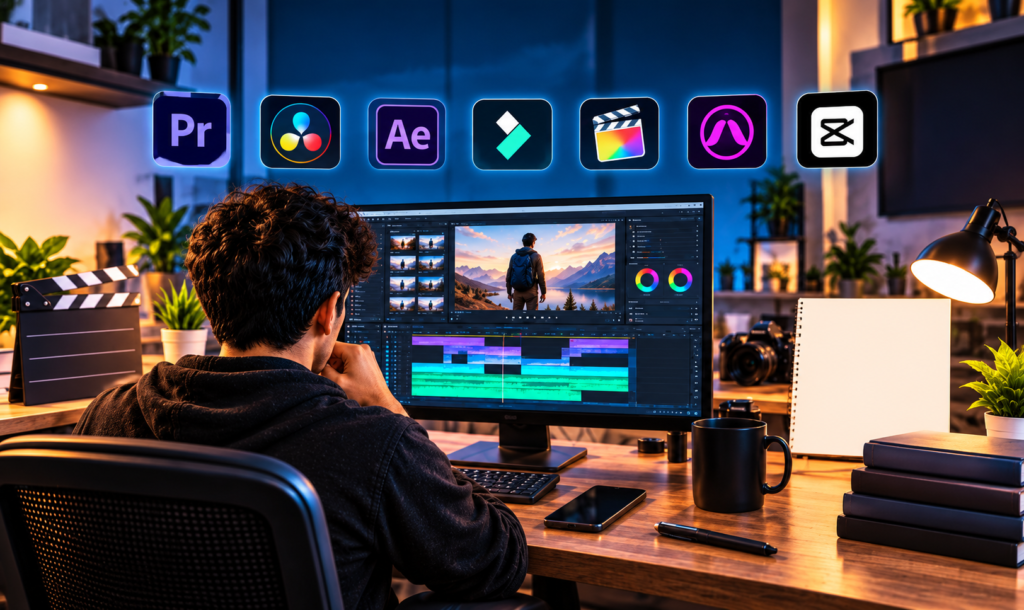
Learning professional editing software is important, but software knowledge should support your creative skills rather than replace them.
Choose one major editing programme first and become comfortable with it before trying to learn several applications at once.
Adobe Premiere Pro and After Effects
Premiere Pro is widely used for professional video editing, while After Effects is useful for motion graphics, animation, and visual effects.
Beginners should first learn cutting, timelines, audio, effects, transitions, and exporting before moving into advanced features.
What Video Editing Skills Do Beginners Need to Learn First?
Beginners should avoid trying to learn every advanced technique immediately. Building a strong foundation makes advanced editing much easier later.
Start with cutting, trimming, timeline management, basic audio, colour correction, text, and exporting.
Basic Cutting, Trimming, and Timeline Management
Start by learning how to import footage, cut unwanted sections, arrange clips, and manage your timeline. These skills are used in almost every editing project.
Once you can edit a basic sequence comfortably, practise improving its pacing and storytelling rather than simply adding effects.
Practise With Real Projects
Tutorials can teach you how a tool works, but real projects teach you how to make editing decisions. Try creating YouTube videos, Reels, advertisements, tutorials, or promotional content.
Regular practice will help you become faster and more confident while also giving you projects for your portfolio.
How to Learn Video Editing Skills in 2026
The most effective approach is to combine structured learning with consistent practical work. Do not spend all your time watching tutorials without actually creating videos.
Start with basic editing, learn one piece of professional software, practise with real projects, and gradually add advanced skills such as motion graphics, colour grading, VFX, and AI.
Build a Video Editing Portfolio
A video editing portfolio allows employers and clients to see what you can actually create. Include your strongest projects and show different skills.
If you want social media work, include Reels and Shorts. If you want YouTube work, include long-form examples that demonstrate storytelling and pacing.
Learn From Feedback and Keep Practising
Ask experienced editors, teachers, colleagues, or clients for constructive feedback. Reviewing your own work can also help you identify problems with pacing, audio, colour, or storytelling.
Keep updating your skills as editing technology and content formats change. Continuous learning is particularly important as AI becomes a bigger part of video production
Can Video Editing Skills Help You Build a Career in 2026?
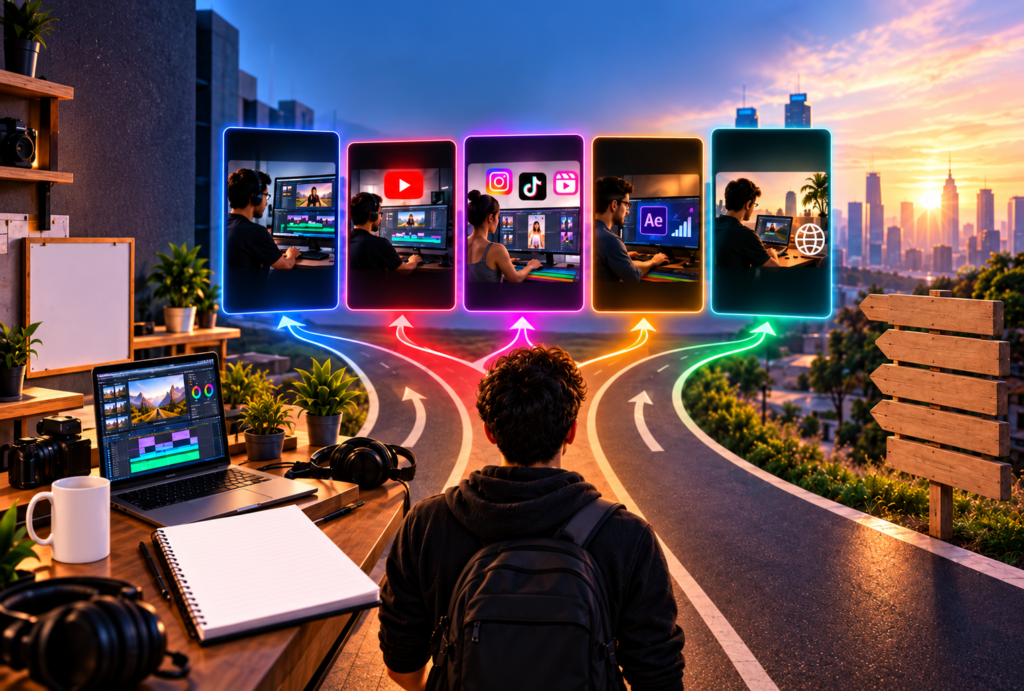
Yes. Video editing can lead to several career paths, including video editor, YouTube editor, social media editor, motion graphics designer, and freelance video editor.
Your career direction will depend on your interests, skills, portfolio, and the type of content you enjoy creating.
Video Editor
A video editor works with raw footage to create finished videos for businesses, creators, media companies, or production teams.
Social Media and YouTube Editor
These editors focus on digital content and need strong pacing, storytelling, captions, graphics, and platform-specific knowledge.
Freelance Video Editor
Freelancers can work with brands, creators, agencies, and businesses. Along with editing, they need communication, time management, and client-handling skills.
What Skills Do Employers Look for in a Video Editor?
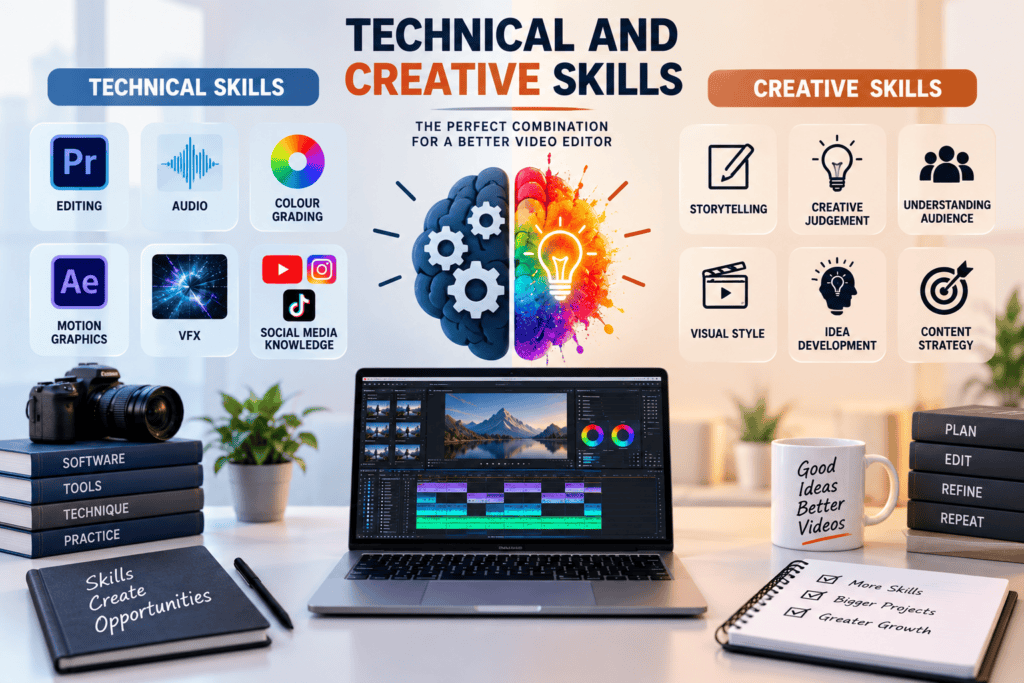
Employers usually want a combination of technical ability, creativity, reliability, and communication.
Being able to use editing software is important, but a strong portfolio can demonstrate your practical ability much better.
Technical and Creative Skills
Employers may look for editing, audio, colour, motion graphics, VFX, and social media knowledge. Storytelling and creative judgement matter just as much.
Editors who can combine technical and creative skills can handle a wider range of projects.
Communication and AI Skills
Editors often work with clients, creators, designers, directors, and marketing teams. Good communication makes feedback and revisions easier to manage.
Knowledge of AI-assisted workflows can also help editors complete repetitive tasks more efficiently while focusing on creative decisions.
What Is the Future of Video Editing Skills?
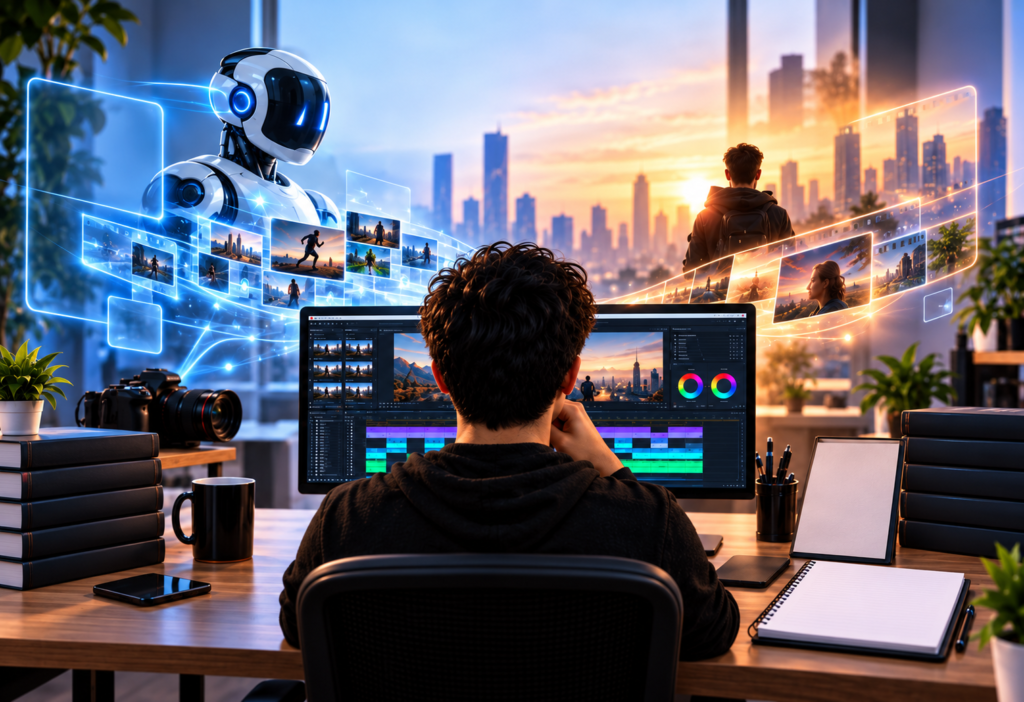
The future of video editing will combine human creativity with increasingly advanced technology. AI may automate more repetitive tasks, but creative judgement will remain essential.
Editors who continue learning and adapt to new formats and technologies can stay competitive in the changing industry.
AI and Creativity Will Work Together
AI can assist with transcription, captions, audio cleanup, and content repurposing. This can give editors more time to focus on storytelling and creative decisions.
However, AI cannot replace the importance of understanding an audience, choosing the right visuals, and creating an emotional connection.
FAQs
Storytelling, professional editing, short-form editing, AI-assisted editing, motion graphics, colour grading, audio editing, VFX, and social media editing are valuable skills to learn.
Yes. Video editors can find opportunities in marketing, entertainment, social media, advertising, education, and freelancing
The basics can be learned relatively quickly, but becoming a professional editor requires regular practice and real project experience.
Yes. AI-assisted editing can improve productivity and automate repetitive tasks. However, it should complement your creativity rather than replace it.
Yes. Some employers and clients focus heavily on practical skills and portfolio quality. A strong portfolio can demonstrate your ability to create professional content.
Conclusion
What Are the Best Video Editing Skills to Learn in 2026? The answer goes beyond learning how to cut and arrange clips. Modern editors need a combination of storytelling, technical editing, short-form content, AI, motion graphics, colour, audio, and social media skills.