AI excels at data, but creativity is human. Marketing won’t replace people—it will empower them. AI manages automation and insights, while humans bring storytelling, emotion, and strategy. Together, they form the perfect model: AI for precision, humans for creativity.
1. What Is AI-Powered Analytics?
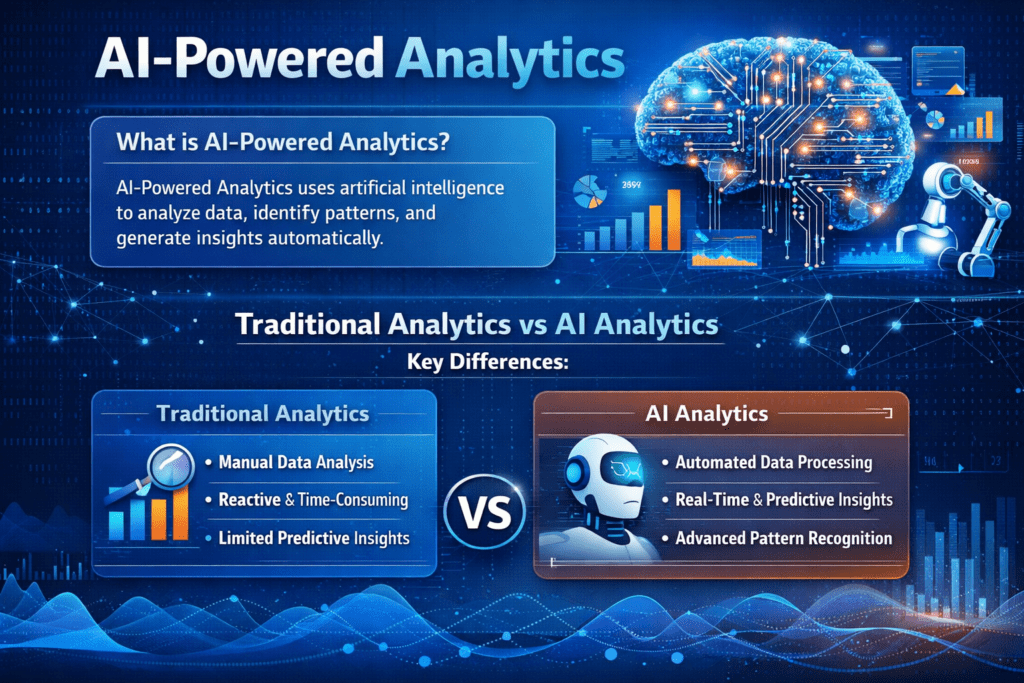
AI-powered analytics refers to the process of using artificial intelligence to collect, analyze, and interpret data automatically to provide faster insights, predictions, and decision-making support. Unlike manual data handling, AI scans large amounts of information in seconds, identifies patterns, and delivers actionable results with high accuracy.
A. Basic Definition
AI analytics uses machine learning, algorithms, and automation to analyze data beyond human capacity — helping businesses track user behavior, trends, engagement, and growth opportunities effortlessly.
B. Difference Between Traditional vs AI Analytics
Traditional analytics focuses on manual data processing and static reports, which can be time-consuming and limited. In contrast, AI analytics is dynamic — it learns continuously, predicts future outcomes, and gives personalized insights in real time.
Where traditional tools show what happened, AI reveals what will happen next and why, making decision-making smarter and faster.
2. How AI Helps Marketers Make Smarter Decisions
AI has transformed digital marketing by turning raw data into actionable insights, enabling brands to make faster, smarter, and more accurate decisions. Instead of relying on guesswork, marketers can now track performance in real time, understand audience interests, predict trends, and optimize campaigns instantly.
A. Data-Driven Strategy
AI tools analyze huge amounts of data to suggest strategy directions, content ideas, targeting methods, and campaign improvements backed by facts — not assumptions.
B. Tracking Consumer Behavior
AI tracks how users interact with websites, ads, and social posts. Marketers can understand what people like, skip, share, save, and buy — leading to better personalization.
C. Predicting Market Trends
Machine learning predicts emerging trends before they go mainstream, helping brands stay ahead of competitors and plan content/products accordingly.
3. Key Features of AI Marketing Analytics Tools
AI marketing analytics tools are designed to simplify decision-making, improve targeting, and boost ROI by analyzing large data sets quickly. They offer powerful features that go beyond traditional analytics, enabling marketers to optimize campaigns with precision and speed.
A. Predictive Analytics
AI predicts future outcomes based on past user behavior and trends. It suggests what type of content, product, or campaign is likely to perform well — helping brands plan ahead confidently.
B. Customer Segmentation
Instead of one broad audience, AI categorizes users based on interests, behavior, demographics, purchase patterns, and interaction history. This leads to more personalized and effective marketing.
C. Automated Insights
AI automatically highlights what’s working, what’s not, and why. It saves hours of manual analysis and provides clear suggestions to improve conversions, engagement, and reach.
D. Campaign Performance Tracking
AI tracks KPIs like clicks, conversions, engagement rate, retention, and ROI in real time. Marketers can monitor results live and tweak campaigns instantly for better performance.
4. Benefits of Using AI in Marketing Analytics
AI has become a game-changer for modern marketing, helping brands make smarter decisions with less effort. By automating data analysis and providing deep insights, AI enables faster execution, stronger targeting, and improved campaign performance. Here are the major benefits:
A. Higher Efficiency & Accuracy
AI processes large volumes of data instantly — with minimal human error. It eliminates guesswork, delivering precise insights that improve decision-making and reduce manual workload.
B. Better ROI Measurement
With AI-driven reporting, marketers can clearly track what’s generating sales or engagement. This makes it easier to allocate budgets, scale profitable campaigns, and stop non-performing ones quickly.
C. Personalized Customer Targeting
AI segments audiences based on behavior, interests, purchase history, and demographics. This allows brands to send the right message to the right audience — resulting in higher conversions and better user experience.
D. Faster Strategy Improvements
Instead of waiting for long reports, AI provides real-time suggestions for optimization. It quickly analyzes patterns, predicts trends, and guides marketers on the next best move — saving time and boosting results.
5. AI Tools Every Marketer Should Use
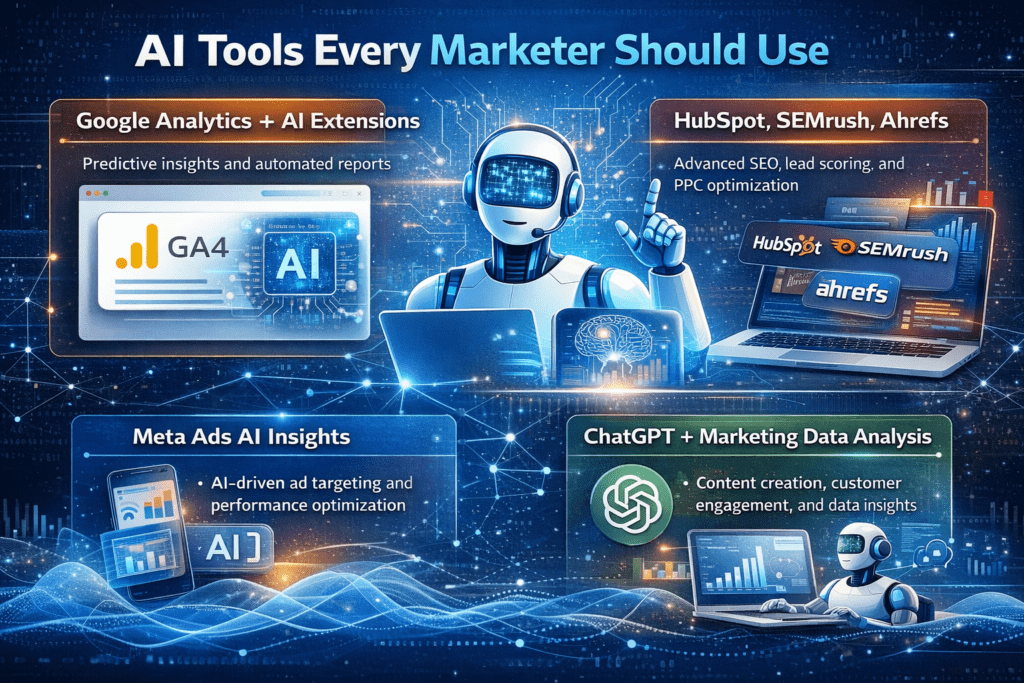
AI-powered tools help marketers analyze data faster, optimize campaigns, and improve targeting. Here’s a list of essential tools that every marketer should know:
A. Google Analytics + AI Extensions
Google Analytics provides detailed website and user behavior data. With AI-powered extensions, you can automatically detect trends, predict traffic patterns, and generate actionable insights without manual analysis.
B. HubSpot, SEMrush, Ahrefs
These tools combine traditional marketing analytics with AI features:
- HubSpot: AI-driven customer segmentation, predictive lead scoring, and automated campaign recommendations.
- SEMrush & Ahrefs: SEO and content insights, keyword trend predictions, and competitor analysis enhanced with AI algorithms.
C. Meta Ads AI Insights
Facebook and Instagram Ads now offer AI-powered insights to track performance, predict campaign outcomes, and optimize targeting in real time — helping marketers get more conversions with less spend.
D. ChatGPT + Marketing Data Analysis Use
ChatGPT can analyze marketing data, generate campaign ideas, write copy, or interpret analytics reports. Combined with your data, it helps marketers make faster, smarter decisions.
6. Personalization & Customer Behavior Analysis
Understanding customer behavior is key to modern marketing. AI helps marketers analyze data at scale to create personalized experiences that increase engagement, conversions, and loyalty. By leveraging AI, brands can predict what users want and deliver content that resonates with them.
A. Understanding User Interests
AI tracks how users interact with websites, apps, social media, and emails. It identifies preferences, patterns, and behaviors — giving marketers a clear picture of what content, products, or services will appeal to each audience segment.
B. Personalized Ads, Emails & Content
Using these insights, marketers can craft targeted campaigns. Personalized messages, emails, or ads lead to:
- Higher click-through and conversion rates
- Improved user engagement
- Reduced marketing waste
For example, an email suggesting products based on past purchases feels more relevant to the recipient.
C. Dynamic Recommendations (like Netflix/Amazon)
AI can offer real-time, adaptive recommendations. Platforms like Netflix and Amazon show content or products based on previous interactions, watch history, or purchases. Implementing similar systems in your business improves user experience and encourages repeat engagement.
7. AI in Social Media & Content Marketing
AI is transforming social media and content marketing by helping marketers analyze trends, optimize content, and improve engagement. Using AI tools, brands can make data-driven decisions and reach the right audience at the right time.
A. AI for Social Analytics
AI tracks engagement patterns across platforms, identifying which posts resonate most with your audience. This helps marketers understand likes, shares, comments, and watch time, enabling better content strategy.
B. Track Engagement Patterns
By monitoring patterns, AI predicts which types of content will perform best, at what time, and for which audience segment. This ensures your posts reach the maximum potential users.
C. Trend & Hashtag Detection
AI identifies trending topics, hashtags, and emerging conversations in your niche. This allows marketers to create timely, relevant content that aligns with audience interests and platform trends.
D. AI for Content Optimization
AI tools suggest improvements in captions, video length, visuals, and keywords to maximize engagement. Marketers can test variations and get data-backed recommendations for higher reach.
E. High-Converting Time to Post
AI analyzes your audience’s active hours and predicts the best time to post for maximum engagement. Posting when followers are most active boosts visibility and reach.
8. Predictive Marketing with AI
AI enables predictive marketing — a powerful approach where data, trends, and machine learning are used to forecast customer behavior and future campaign results. Instead of reacting to outcomes, businesses can plan ahead strategically and take action before trends peak.
A. Forecast Sales & Engagement
AI analyzes historical data, user behavior, and seasonal trends to estimate future sales and engagement levels. This helps marketers allocate budgets wisely and plan content or product launches for maximum impact.
B. Anticipate Customer Needs
With predictive insights, AI can identify what customers may want next — such as products they might buy, content they prefer, or services they are likely to use. This enables personalized marketing that boosts conversions and customer satisfaction.
C. Predict Future Campaign Outcomes
AI tools evaluate campaign data in real time, forecast performance, and highlight which strategies will work best. Marketers can adjust targeting, creatives, and offers early — saving time and reducing ad spend.
9. How AI Improves Ad Performance: The Future of Smarter Digital Marketing
In today’s competitive digital world, running ads is not just about spending money—it’s about spending smartly. Traditional advertising requires continuous monitoring, manual adjustments, and a lot of guesswork. But with AI-powered advertising, marketers can automate decisions, analyze performance, and increase ROI faster than ever.
Artificial Intelligence has transformed ad campaigns by optimizing budgets, testing creatives, and predicting what will work best—before spending big. Let’s explore how AI boosts ad performance in three powerful ways.
A. Smart Bidding & Budget Optimization
Managing ad spend manually often leads to over-budgeting or poor allocation. AI tools analyze user behavior, conversions, engagement, and historical data to allocate budgets automatically where results are strongest.
B. A/B Testing Automation
Testing multiple versions of ads is crucial—but also time-consuming if done manually. AI automates A/B testing by generating, comparing, and optimizing versions of creatives, copy, and audiences.
C. Identify High-Performing Creatives
AI analyzes engagement, CTR, user behavior, and design elements to identify top-performing creatives. It detects effective colors, layouts, headlines, CTAs, tone, and when ads lose impact. This helps marketers optimize, create better variations, and scale campaigns faster.
10. Future of AI in Marketing Analytics
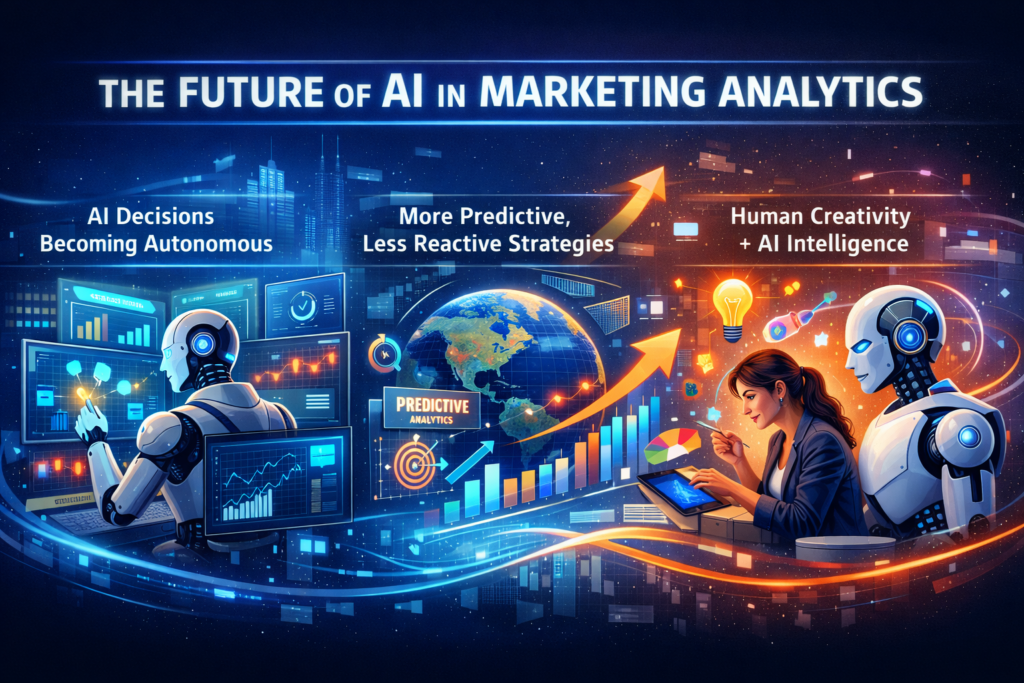
Artificial Intelligence is rapidly transforming the way businesses understand customers, run campaigns, and analyze performance. As AI evolves, the future of marketing analytics is heading toward more automated, predictive, and highly personalized decision-making. Here’s how:
A. AI Decisions Becoming Autonomous
AI is evolving from insight provider to autonomous decision-maker. It can adjust ad budgets, choose audiences, and optimize campaigns in real time, reducing human error and reacting faster to market changes for more efficient marketing results.
B. More Predictive, Less Reactive Strategies
Traditional marketing relies on past data, while AI predicts future outcomes through behavior and trend analysis. Marketers can anticipate engaging content, conversion timing, and campaign performance. Predictive marketing improves planning, boosts ROI, and increases customer retention.
C. Human Creativity + AI Intelligence
11. Real Examples of Brands Using AI Analytics
“Real Examples of Brands Using AI Analytics” refers to actual cases where companies have implemented AI-driven analytics to improve their marketing, sales, operations, or customer experience. These examples show how AI isn’t just theoretical—it’s actively helping brands make smarter decisions, predict trends, and optimize strategies.
A. Case Studies of Successful Campaigns
Many top brands leverage AI analytics to optimize marketing performance. For example:
Netflix: Uses AI to recommend shows, predict viewer preferences, and personalize content.
Coca-Cola: Analyzes social media trends to guide campaign messaging and product launches.
Amazon: Employs AI to predict customer behavior, optimize pricing, and improve ad targeting.
B. What Marketers Can Learn From Them
Leverage AI to understand customer behavior and preferences.
Use data-driven insights to personalize campaigns and content.
Continuously monitor performance to optimize strategies in real time.
Combine AI precision with human creativity for maximum impact.
12. AI-Generated Customer Personas
AI-Generated Customer Personas are detailed profiles of ideal customers created using artificial intelligence. Unlike traditional personas, which are manually crafted based on surveys or assumptions, AI-generated personas use real data from customer behavior, demographics, interactions, and online activity to create more accurate, dynamic, and actionable profiles.
A. Behavior-Based Audience Profiling
AI analyzes customer interactions, purchase history, and online behavior to create detailed audience profiles. This allows marketers to understand preferences, interests, and needs, enabling more precise targeting and personalized campaigns.
B. Look-Alike Targeting for Campaigns
Using AI-generated personas, brands can identify new potential customers who resemble their best existing clients. Look-alike targeting helps expand reach, increase conversions, and improve campaign efficiency by focusing on high-potential audiences.
Turn creativity into career—Join GICT Digital Marketing Course!
Conclusion
Combining powerful AI tools with smart strategy and human creativity creates the ultimate formula for marketing success. AI handles data, automation, and insights, while humans focus on storytelling, emotional connection, and strategy.
Start leveraging AI analytics today to optimize campaigns, predict customer behavior, and drive growth like never before. Success comes from using technology to empower, not replace, marketers.